
The journal
Which windshield washer fluid should I use?
Choose vehicle-compatible washer fluid with labelled protection for the route and the correct dilution. Additive restrictions and mixed-fluid performance depend on the actual products.
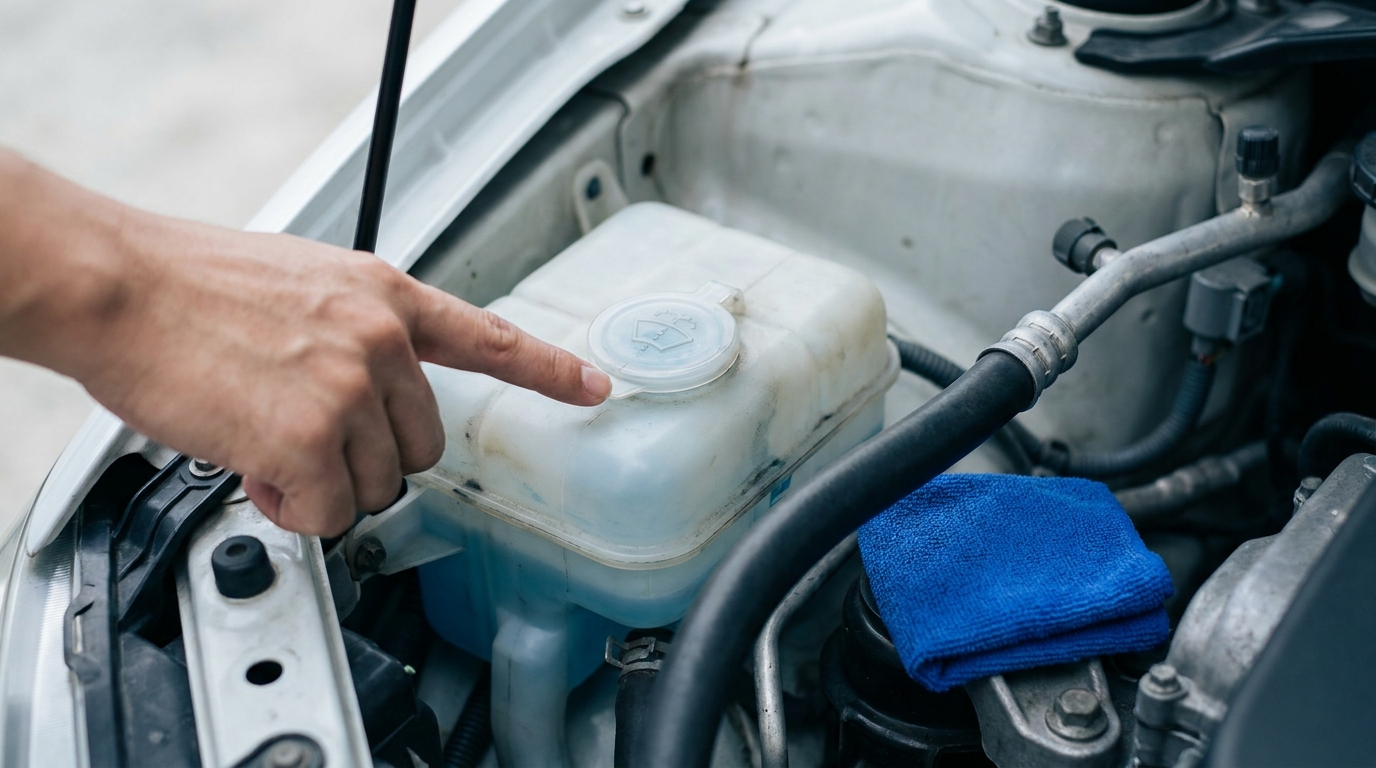
Choose windshield washer fluid that the vehicle maker permits and whose labelled freeze protection suits every climate on your route. Read the actual product instructions for ready-to-use versus concentrate. Colour and an “all-season” name alone are not enough to establish compatibility or the correct mixture.
Check the vehicle requirement first
Use the owner’s manual for your exact vehicle and market. Confirm the washer reservoir symbol before adding anything; washer fluid is not engine coolant, brake fluid or another under-bonnet liquid. If you cannot identify the filler, stop and check the manual rather than guessing from the cap colour.
Vehicle-specific restrictions can matter. For example, the linked UK Model S manual excludes washer fluids containing water-repellent or bug-wash additives. That is a concrete reason not to recommend bug wash to every driver. Follow the edition relevant to your own vehicle, not a restriction copied from a different model or market.
Read the freeze-protection and mixing label
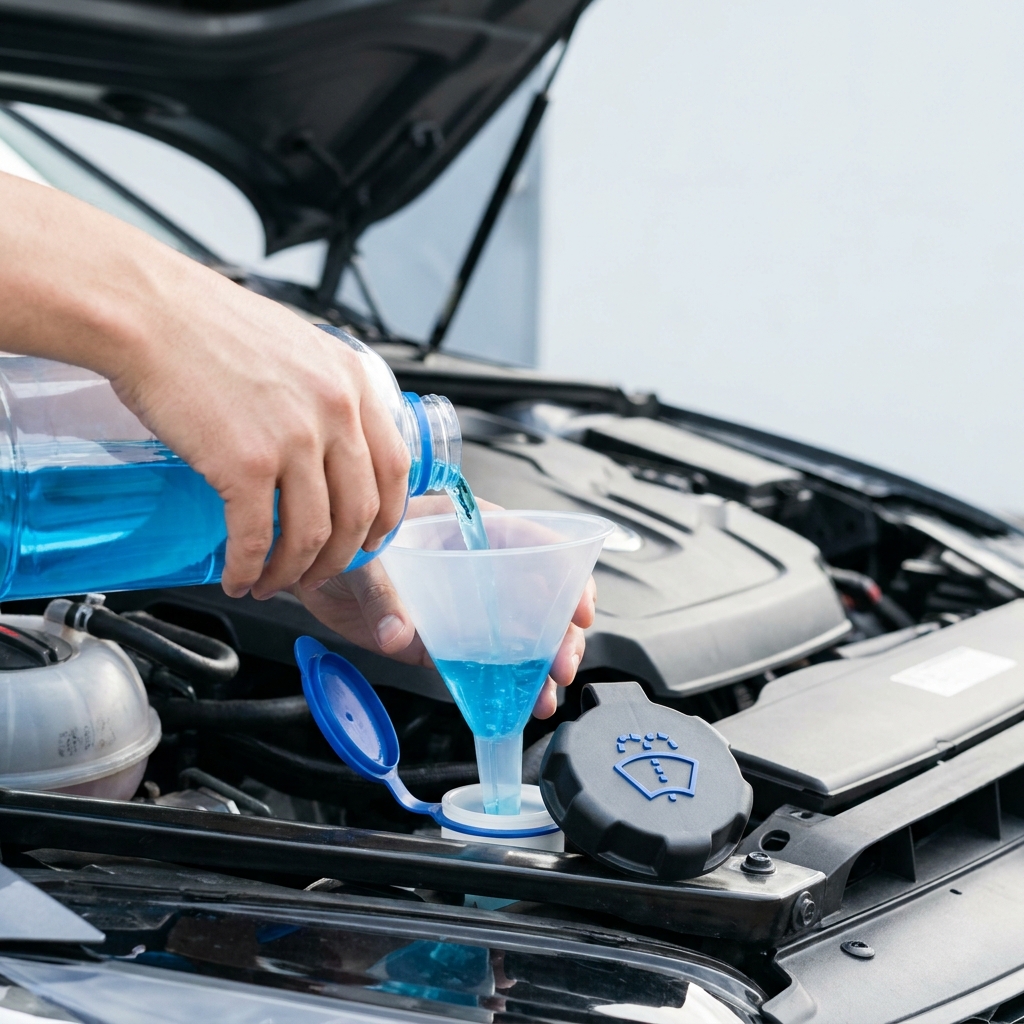
Choose a product whose stated protection suits the coldest conditions you expect. Check what the rating assumes: a ready-to-use product is not the same as a concentrate that needs a specified dilution. Adding water or another fluid can change the finished mixture’s protection.
Follow the exact dilution chart and permitted water type if mixing is required. Do not estimate a new freeze rating by averaging two bottle labels. Keep the labelled container available so you can check the formula rather than trying to identify an unknown liquid by colour or smell.
Do not assume different fluids can be mixed
Rain-X’s current support guidance advises against mixing brands or types and notes possible winter-performance and compatibility problems. Ask the fluid and vehicle maker about the actual products if the reservoir’s contents are unknown.
Plan a compatible seasonal change before the route turns cold. Use the vehicle maker’s permitted changeover procedure; do not run a pump dry or repeatedly empty a reservoir without regard to visibility. A small winter-fluid top-up does not establish that the entire system now has the new bottle’s stated freeze protection.
Refill and check according to the manual
Use the correct reservoir, avoid overfilling and handle spills as the product and vehicle instructions direct. Store fluid in its labelled container and observe the label’s handling precautions. After a permitted refill, check operation as directed without spraying into people or running dry wipers over grit.
If the washers do not work, adding a different formula is not a diagnosis. A frozen line, blocked nozzle, leak or other fault needs the relevant troubleshooting procedure. Do not keep driving with inadequate visibility or repeatedly operate a system that cannot deliver fluid.
Put this into practice
Check the vehicle and market-specific instructions, expected cold conditions and the product’s dilution directions before filling. Do not decide compatibility from fluid colour or mix products simply because both are labelled washer fluid.
Choose the actual compatible fluid
