
The journal
How to remove Armor All from rubber floor mats
Identify the actual Armor All product, follow mat-specific removal advice and resolve slippery residue before driving; one cleaning pass is not a safety guarantee.
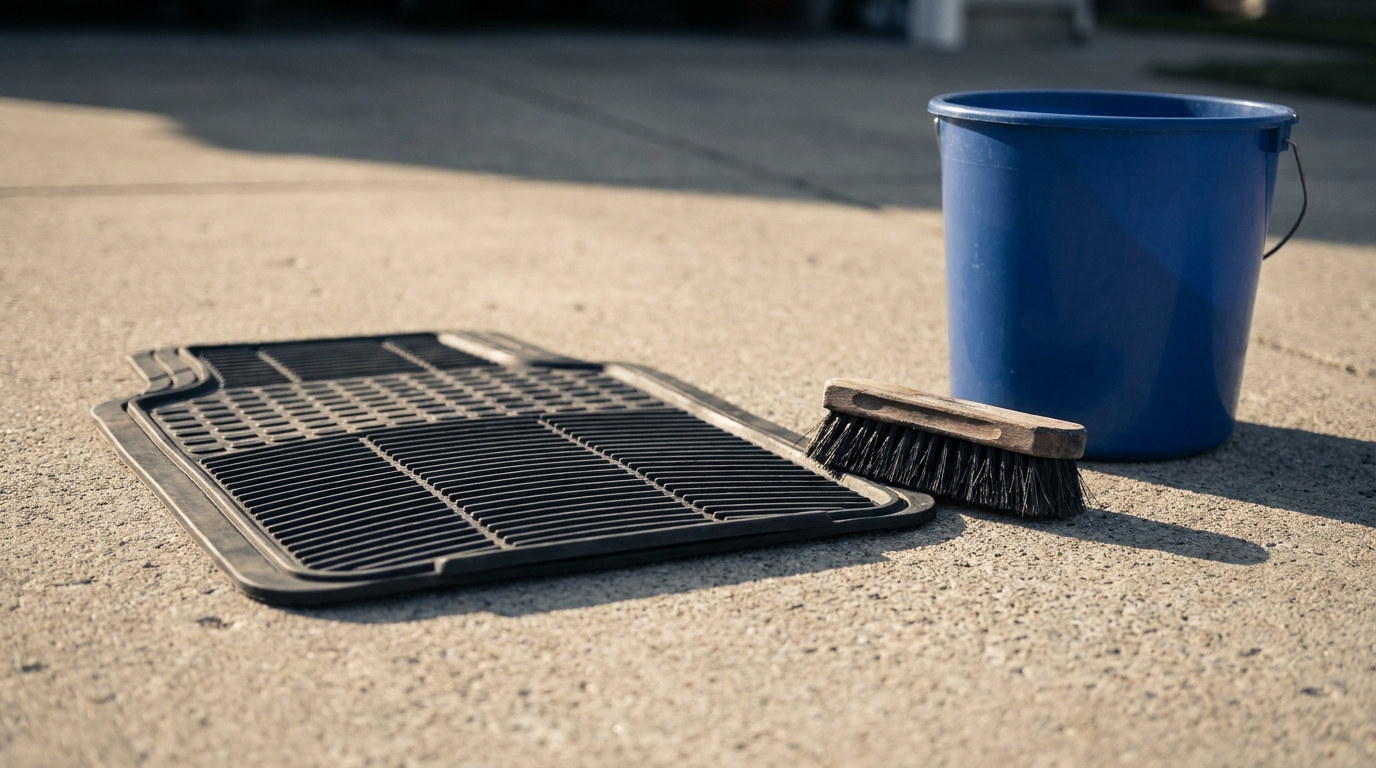
First identify which Armor All product was applied and what the floor mat is made from. The brand sells cleaners as well as protectants, so “Armor All” alone does not identify the residue. If a mat, footwear or pedal area is slippery, do not drive until the issue has been resolved safely.
Check the product warning before trying a remover
Armor All Original Protectant warns against use on floors, vehicle controls and other surfaces where slipperiness may be hazardous. That warning is about the actual protectant; it is not evidence that every cleaner sold under the brand has the same purpose or instructions.
Keep the bottle or product details. Check the mat maker’s cleaning instructions and ask the product manufacturer for removal advice if the label does not cover a mistaken application. Do not combine chemicals or assume a household degreaser is compatible with every molded liner, backing or carpet fiber.
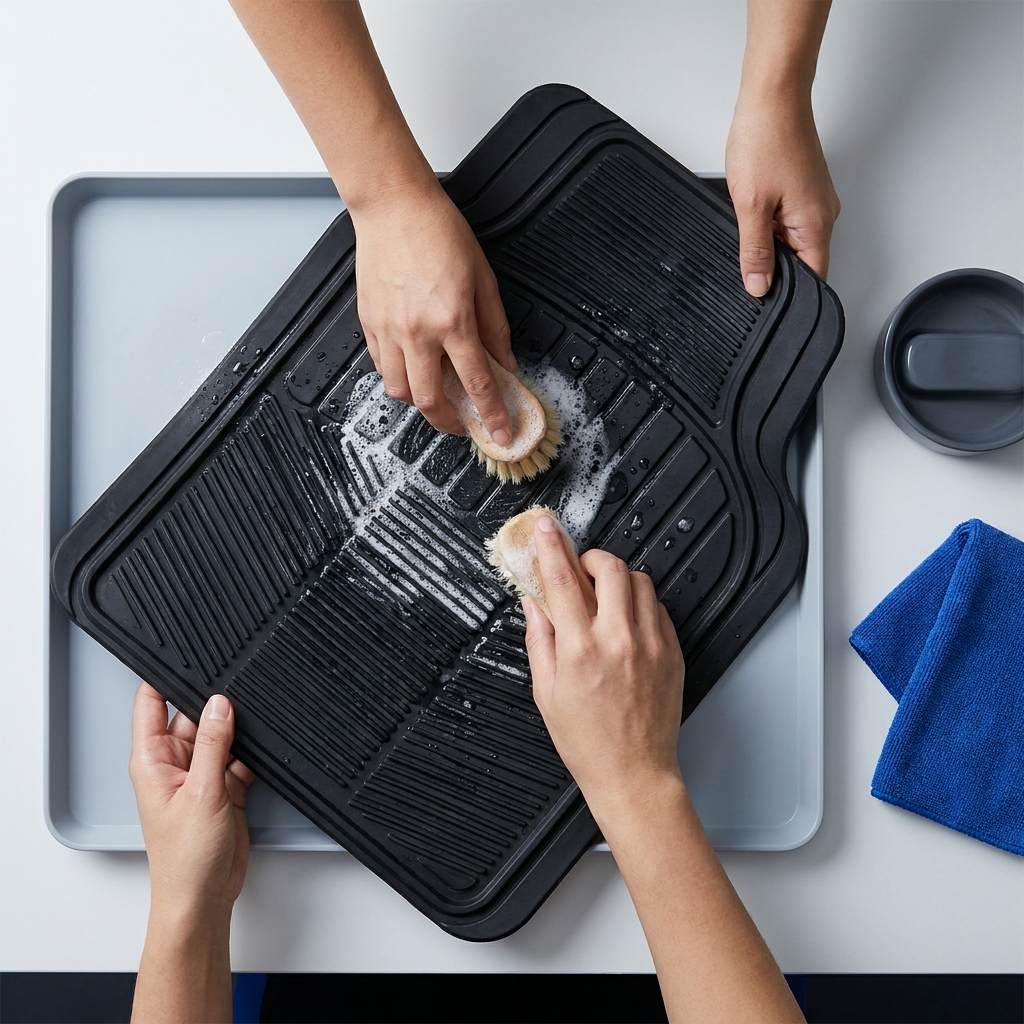
Remove the mat and use an approved cleaning method
- Park securely and take the affected mat out before cleaning. Keep water and cleaner away from the driving controls.
- Identify whether it is a molded all-weather mat or a carpet product. Follow its own care instructions rather than using a rubber-mat method on carpet.
- For a mat whose maker permits it, clean with the recommended product or mild detergent and water, using the specified brush. Rinse away loosened residue thoroughly.
- Dry both sides as instructed, then inspect for remaining slickness, altered material or damage. A dry surface can still have unwanted residue.
- If the film remains or the material has changed, stop escalating the treatment and contact the manufacturer. Replacement may be necessary.
For example, WeatherTech’s molded-mat instructions allow its recommended cleaner or mild detergent with warm water and a medium-bristle brush, followed by rinsing and drying. That provides a documented option for the products it covers, not a universal guarantee that one wash removes every protectant.
Avoid a second treatment that creates another problem
Do not add tire shine, oil or another dressing to hide a patchy finish. Nor is vinegar, baking soda, solvent or a powerful degreaser automatically a safe residue remover. Product compatibility matters more than a recipe described as a quick fix.
A shiny patch is not a reliable pass/fail test by itself. Some materials naturally look glossy, while a dull-looking area may still be slick. Follow the maker’s advice for assessing the cleaned product, and do not treat a hand-rub test as proof that the whole pedal area is safe.
Refit only when the problem is resolved
Use the correct mat position and retention points and follow the vehicle’s stationary pedal-clearance checks. Do not stack another mat over the affected one or refit a mat that can move into the controls. If residue reached shoes or pedals, those surfaces need appropriate attention as well.
The Armor All interior-cleaning checklist provides general mat-care context, but a routine cleaning checklist is not a certification that protectant contamination has been removed. If safe condition remains uncertain, get product-specific help and keep the vehicle out of use until the driving area is safe.
Deal with protectant on floor mats
