
The journal
When should windscreen wiper blades be changed?
Replace damaged or poorly clearing wiper blades using the maker’s interval and exact fitment, while checking glass contamination and arm faults too.
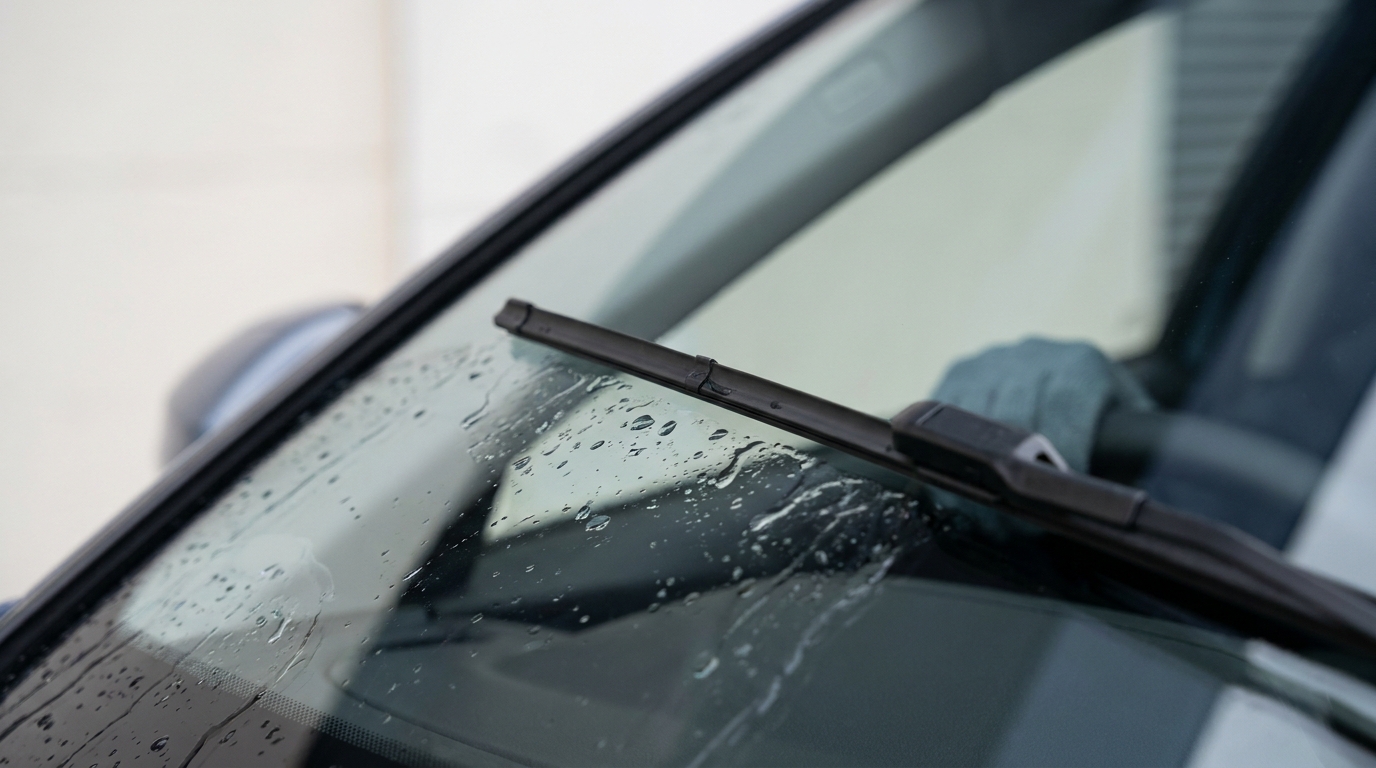
Change windscreen wiper blades when they are damaged or no longer clear the glass properly, and follow the blade and vehicle makers’ inspection and replacement guidance. A calendar interval is a reminder to check their condition, not permission to keep using blades that leave visibility unsafe.
Use the time interval as guidance
Bosch gives a six-to-twelve-month replacement recommendation, depending on use and weather. Treat that as the cited manufacturer’s guidance, not a law applying identically to every blade and climate. Sun, frost, debris and frequent use can affect performance, so inspect between scheduled checks.
A seasonal reminder can be convenient, especially before the local wet or cold season. It does not mean an undamaged blade must be replaced twice a year regardless of its maker’s instructions, or that a failing blade should wait until the next reminder.
Look for damage and poor clearing
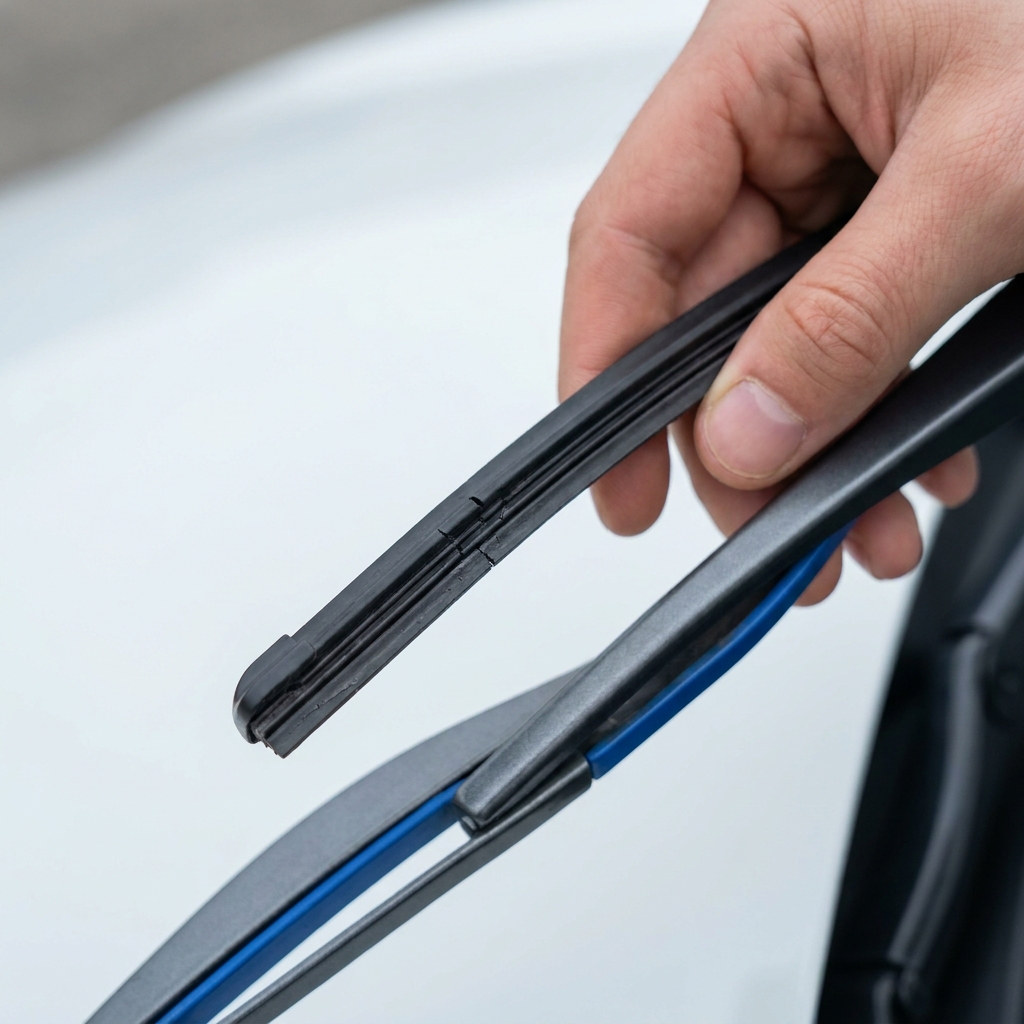
- Split, cracked, torn or missing wiping rubber.
- An insecure blade or damaged attachment.
- Persistent uncleared areas, streaking or smearing during normal use.
- Chattering or skipping that continues after the glass and blade have been checked according to their care instructions.
These symptoms call for attention, but not every smear is caused by the rubber alone. Contamination on the glass, an unsuitable cleaning product, an incorrect blade fit or an arm/mechanism problem can also affect clearing. If visibility becomes poor while driving, stop somewhere safe and resolve the problem rather than continuing through bad weather to test the blades.
Check before buying replacements
Use the exact vehicle fitment, including side and rear position where relevant. Two front blades may have different lengths or attachments. Check an approved fitment guide and the model’s manual; a blade that looks similar is not enough evidence of compatibility.
For a useful example, suppose fresh washer fluid and an approved glass clean remove a greasy smear, but the rubber is visibly split. The split still calls for replacement. In a different case, new correctly fitted blades that keep missing the same area warrant inspection of the glass, arm or mechanism rather than another blind purchase.
Fit them without damaging the glass
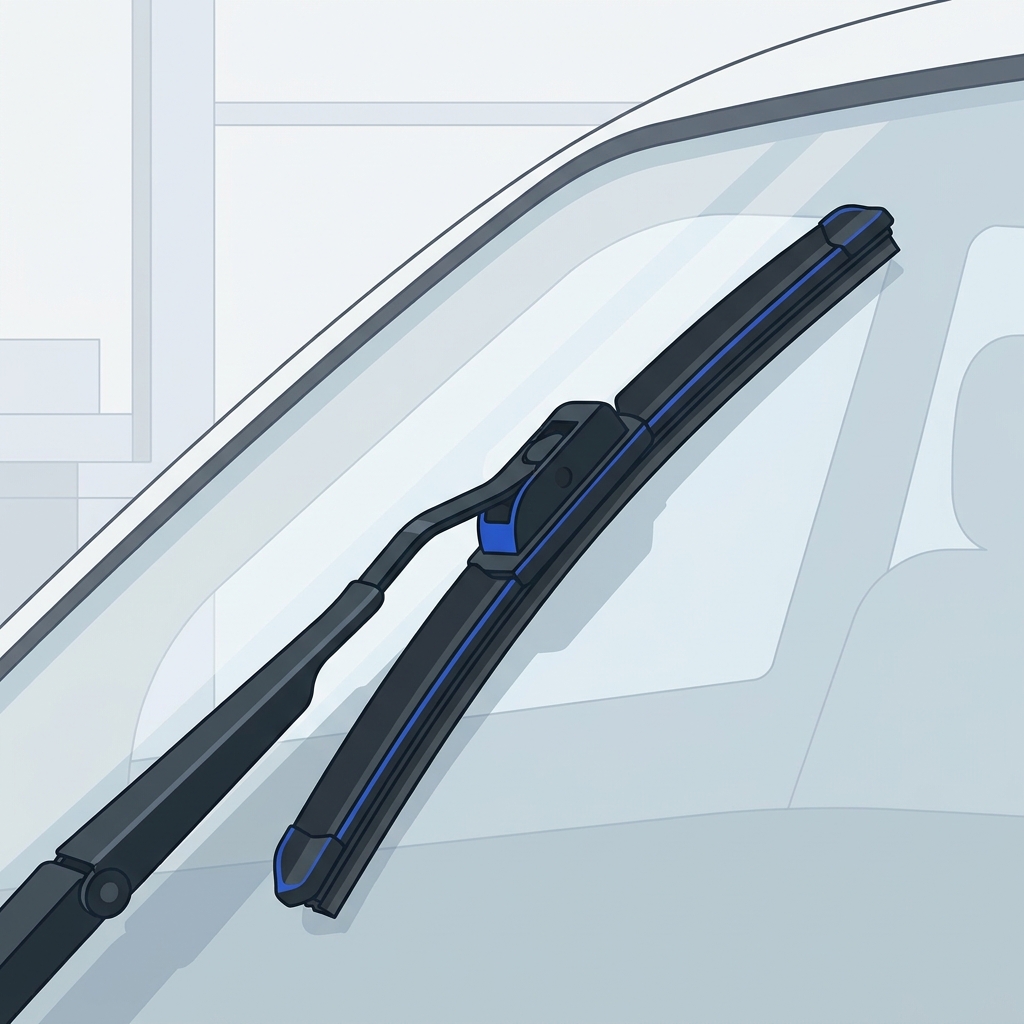
Park securely and follow the vehicle’s wiper-service-position procedure if one is required. Do not force an arm past the bonnet or improvise a service mode from another model. Keep a spring-loaded arm controlled while the blade is detached: a bare arm snapping back can damage the windscreen.
Follow the attachment instructions for the replacement, check that it locks securely, and remove any transport cover specified by the maker. Return the arms as instructed and test normal clearing with appropriate washer fluid while stationary. Keep hands and tools clear of the moving mechanism.
Include the rear wiper in your condition check if the car has one. Record the fitment and replacement date for a convenient future reminder, then continue judging actual performance. If correct blades do not restore reliable clearing, have the fault investigated.
Decide whether wiper blades need changing
