
Use inspection and the exact product’s maintenance instructions rather than a universal calendar interval. Exposure, washing and application history vary. Schedule a check, clean the car appropriately, then decide whether maintenance or reapplication is actually needed.
Choose by the job
| Decision | Why it matters | What to check |
|---|---|---|
| Exposure | Outdoor parking differs from protected storage | Record how the car is used |
| Wash routine | Products and methods affect maintenance | Keep a simple care record |
| Product instructions | Intervals and preparation are specific | Read the actual guidance |
| Visible behaviour | One sign does not describe the whole finish | Inspect a clean surface |
A calendar is a prompt, not a diagnosis
A fixed interval cannot account for every product, storage arrangement or wash routine. Use our care calendar to remind yourself to inspect the finish. A reminder should trigger a look at the condition and the product instructions, not automatically another coat.
Record the starting point
Write down what was applied, when it was applied and how the car was prepared. Keep the label or the manufacturer’s directions with that note. A new spray over several unknown older products makes it harder to understand what you are seeing later.
Inspect after a normal compatible wash
Look for remaining contamination, uneven appearance or a problem that needs a separate cleaning method. Water beading is one observation, not a complete measurement of the protection left on the car. Do not respond to every patch of water by applying a stronger product.
Respect the application window
If the product calls for dry conditions or a curing period, choose a time when you can follow it. New paint, wraps and professionally applied coatings may have their own care instructions. Keep a maintenance note so the next decision starts with the actual product history rather than a generic three-month rule.
Make the choice useful
Budget for the preparation and materials required by the product, not just the bottle. A routine that is easy to follow is preferable to a complicated schedule that encourages shortcuts. If a finish has an unknown coating, wrap or recent repair, establish its care requirements before adding protection. A protection product should not conceal the need to assess damaged paint.
Before the next session
Not by itself. Surface contamination and the nature of the product can affect the way water behaves. Follow the product’s inspection and maintenance guidance and consider the clean surface rather than treating one observation as a complete durability test.
ILLUSTRATIVE EXAMPLE
A practical example
Use the care calendar to create inspection dates, not automatic wax appointments. At a check, note the product last used, any change in appearance and the care performed since. That record can make the next decision clearer than applying another layer because a reminder appeared.
Your next steps
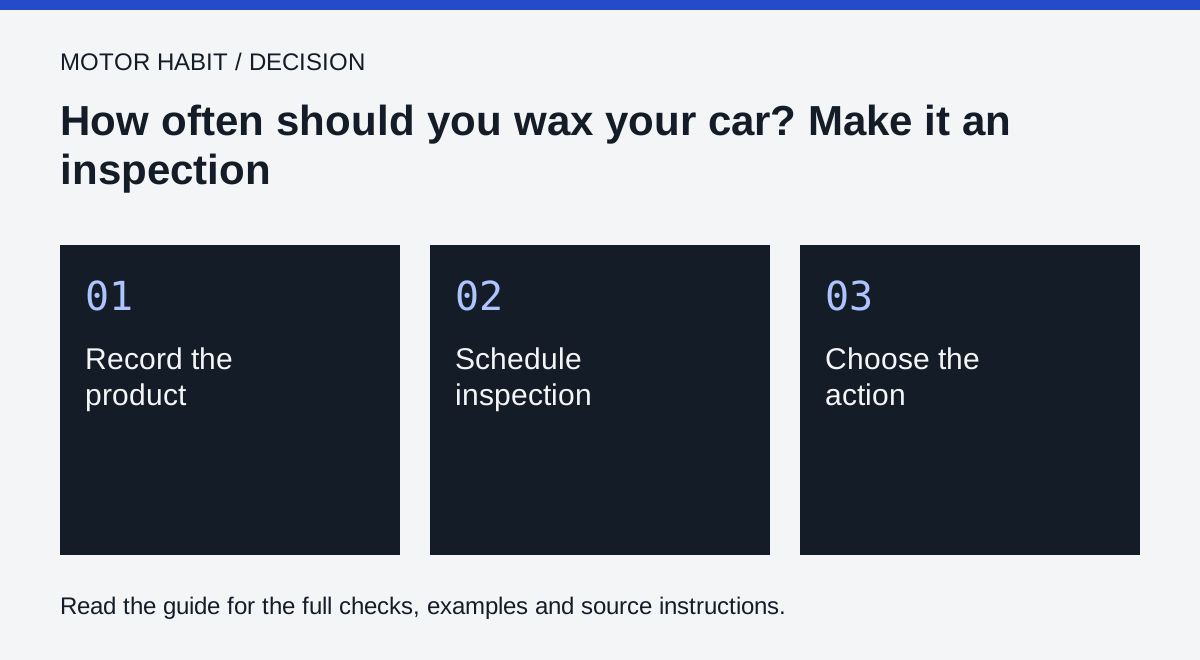
- Record the product: keep its instructions
- Schedule inspection: review the clean finish
- Choose the action: maintain or reapply as directed
Questions that come up
Is there one correct waxing interval?
No. Use the exact product guidance and inspect the car’s condition and use.
Does weak beading prove the coating has failed?
It is not conclusive on its own. Surface contamination and other residues can affect water behaviour.
Does a loss of water beading prove the protection is gone?
Not by itself. Surface contamination and the nature of the product can affect the way water behaves. Follow the product’s inspection and maintenance guidance and consider the clean surface rather than treating one observation as a complete durability test.
Sources and further reading
Source references for this edition, September 8, 2026. Recheck changeable rules and the exact product or vehicle instructions before acting.