
The journal
How to demist car windows safely and keep them clear
Use your vehicle's demist setting, distinguish inside condensation from outside mist and investigate recurring cabin dampness without relying on a countdown.
Key takeaways
- Do not set off until you can see clearly. There is no guaranteed one-minute clearing routine.
- Use the vehicle's windscreen demist or defrost setting and follow its manual; automatic systems may select the needed airflow themselves.
- Recurring mist can be a maintenance or moisture problem, not simply a reason to keep wiping the glass.
Start with visibility
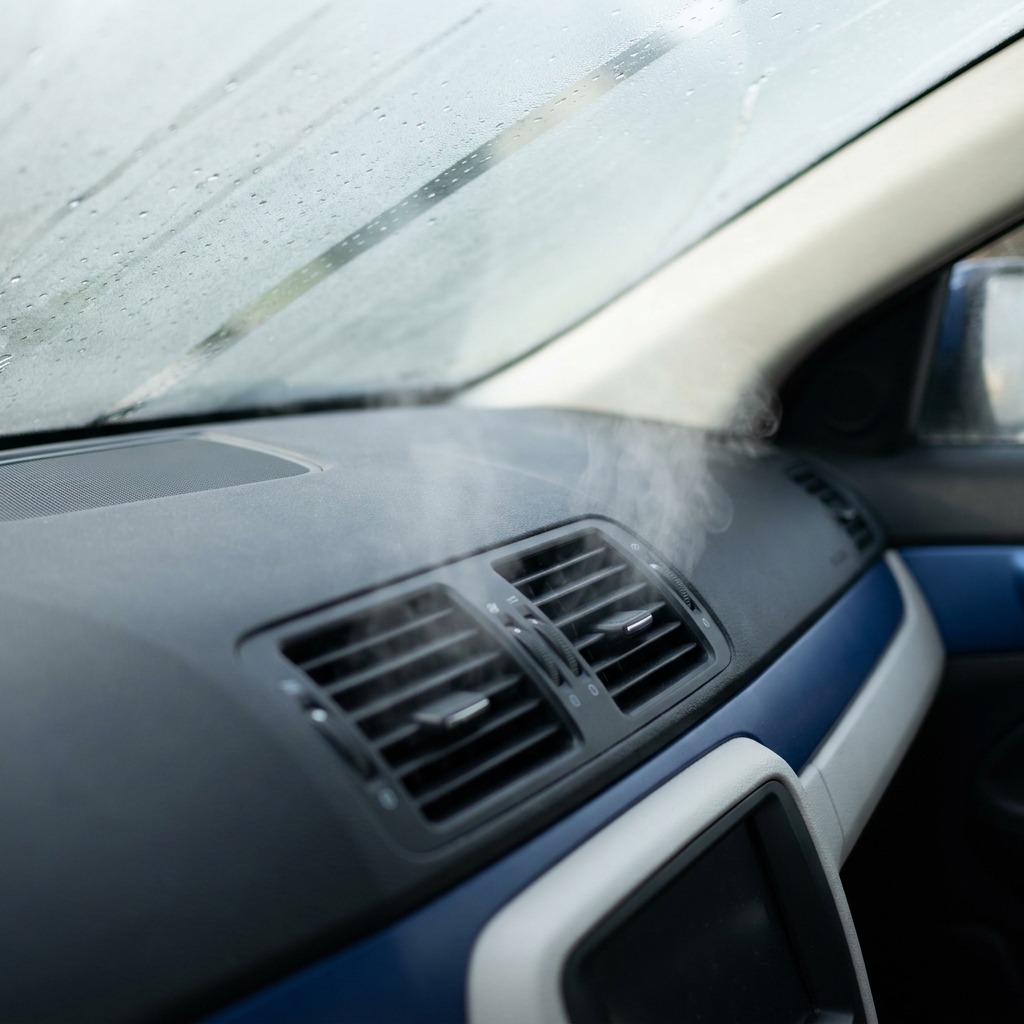
For condensation on the inside of the windscreen, use your vehicle's demist or defrost setting. Where the controls require manual selection, direct air at the glass and follow the vehicle's instructions for temperature, fan, outside air and air conditioning. Stay parked until the windscreen and other necessary windows give a clear view.
If visibility deteriorates during a journey, make a safe stop rather than continuing with an obscured view or reaching across the windscreen to wipe it. Clearing one small patch is not a substitute for seeing the road, mirrors and surroundings properly.
RAC's demisting guidance recommends directing warmer air at the glass, using air conditioning and keeping recirculation off for interior mist. Its advice also points to airflow and heating faults when the normal routine is ineffective.
Find the right controls for your car
Look for the windscreen-shaped demist symbol, and distinguish it from the rectangular heated-rear-window control. Check the manual before relying on a control you have not used. The rear-window heater does not necessarily clear the front glass.
On an automatic climate system, the dedicated demist mode may choose outside air or air-conditioning behaviour for you. For example, Ford's documented climate controls describe outside-air selection in defrost modes. That is a model-specific illustration, not a control map for every vehicle.
Do not keep overriding an automatic demist programme because a generic checklist says a particular button must remain lit. Air-conditioning operation and cold-weather restrictions vary. The handbook for your vehicle takes priority.
Check which side is misted
Interior condensation and moisture on the outside of cooled glass need different attention. AAA Northeast's explanation distinguishes cold-weather interior fog from exterior condensation in warm, humid conditions.
While safely parked, establish where the moisture is rather than repeatedly changing every setting. Wipers act on outside moisture; they cannot remove condensation from the inside. Conversely, wiping the inside cannot clear water on the exterior.
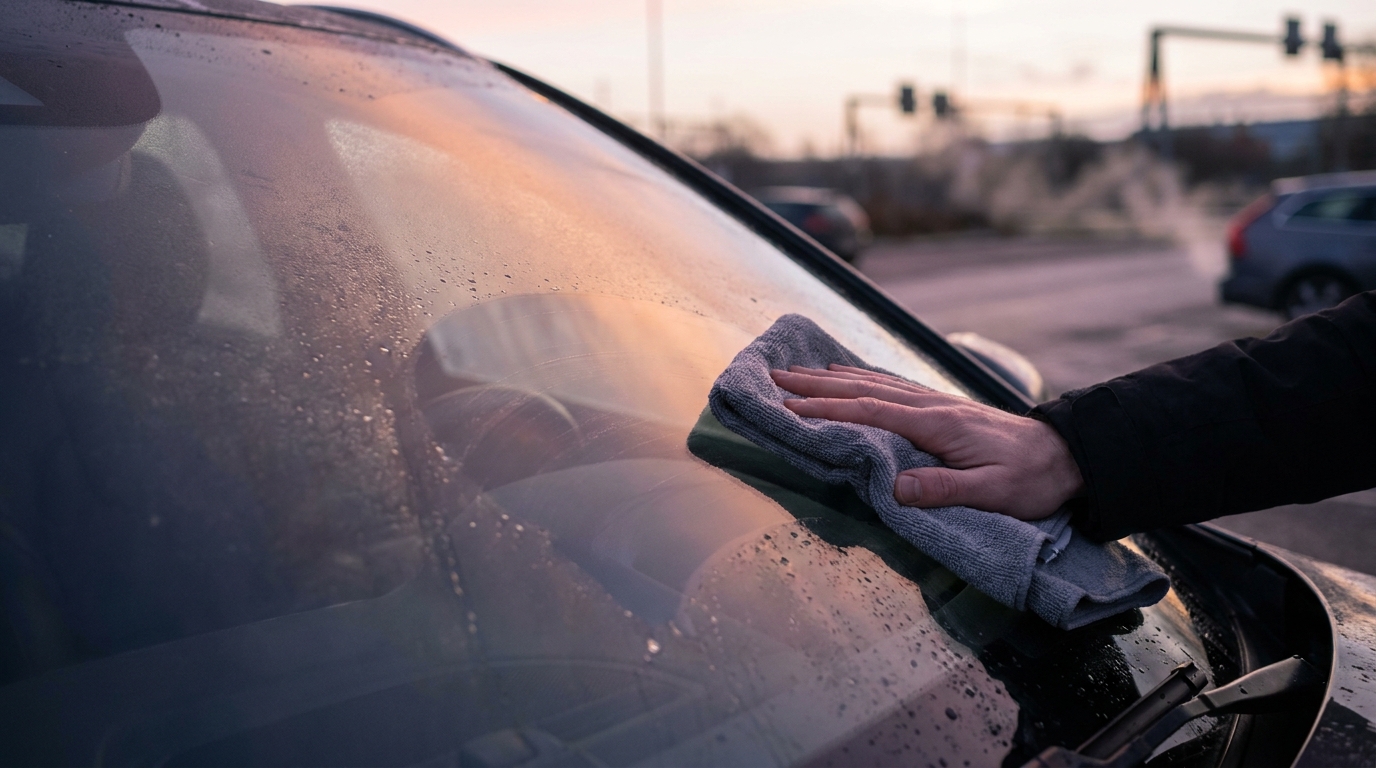
Keep a suitable clean cloth for glass care when stopped, but avoid using a dirty sleeve or reaching across the dashboard while moving. A wipe can leave a film or streaks, so restore a clear view and use the ventilation system appropriately before continuing.
Reduce the moisture you bring into the cabin
After the journey, check for wet coats, umbrellas and damp mats rather than leaving them inside indefinitely. Make a note of whether the problem followed heavy rain, cleaning or carrying wet equipment. That observation can help distinguish a one-off wet trip from a recurring issue.
Inspect accessible areas without dismantling trim or interfering with electrical components. If carpets remain wet or mist returns persistently, arrange an inspection. A moisture absorber should not become a way of postponing a leak repair.

Use a short troubleshooting record
Record the weather, whether the moisture is inside or outside, the selected mode, whether air reaches the windscreen vents and whether cabin dampness is visible. Do not diagnose a heater or refrigerant fault from one symptom. Give the observations to a qualified technician if the system does not clear the glass normally.
Before setting off
This is a reminder, not a roadworthiness test. A checked box does not make an obscured window safe.
Keep cleaning and diagnosis separate
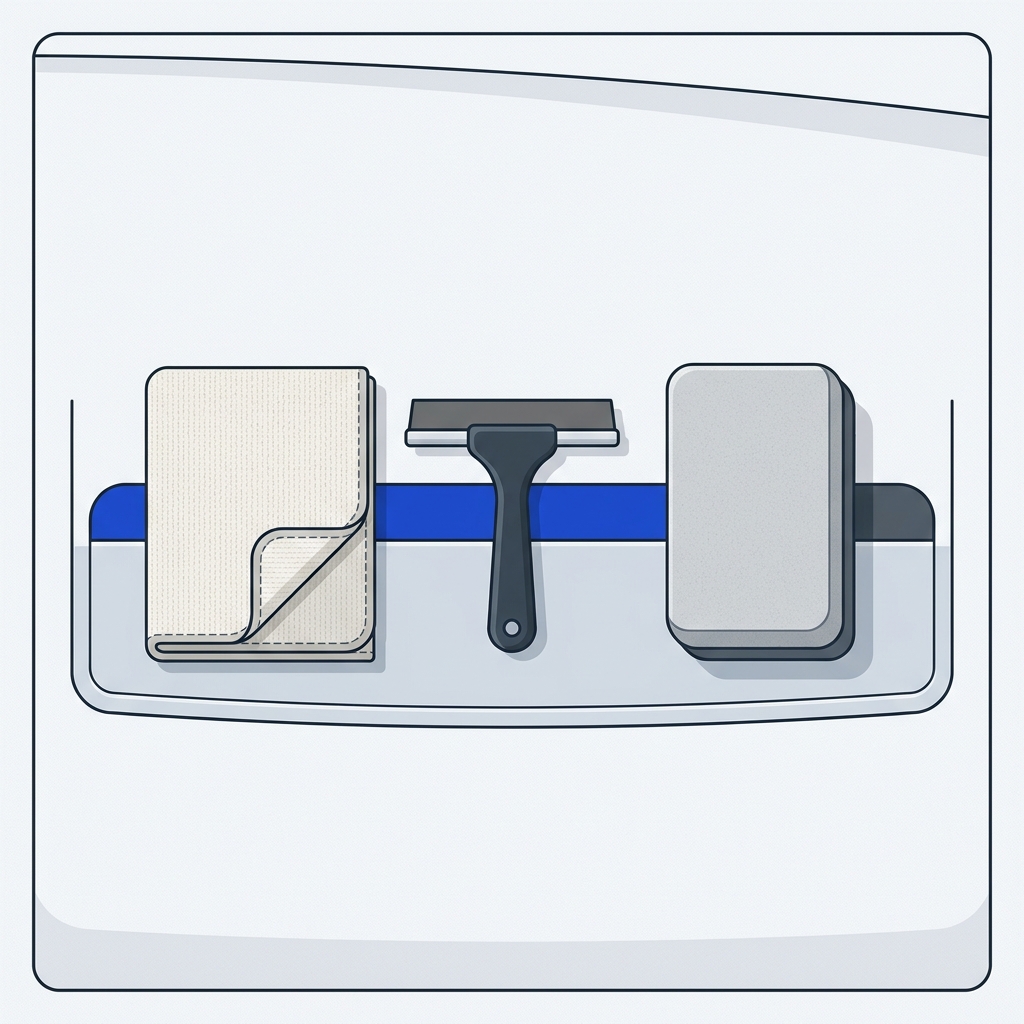
Use products compatible with the glass, tint and any coatings, following their instructions. Our interior windscreen cleaning guide covers the cleaning routine, while the surface atlas helps identify material-specific care.
Cleaning is useful maintenance, but it cannot repair missing airflow, a heating fault or water entering the cabin. If the normal demist procedure does not restore a clear view, resolve that problem before relying on the car for another trip.
Common questions
Should demisting take less than two minutes?
There is no dependable universal time. Wait for actual clear visibility rather than a countdown.
Can opening a window help?
RAC includes briefly opening a window as an option, but conditions vary. It does not replace the vehicle's demist procedure or the need for a clear view.
Why does fog return straight away?
Check the selected mode and recurring dampness, and seek an inspection if normal demisting is ineffective. Repeated wiping does not identify the underlying cause.