
The journal
Can I use Windex on the interior of my car windshield? Practical safety-first cleaning guide
Learn how to clean car windshield inside streak free, when to avoid Windex Original, and safe ammonia-free routines for tinted and untinted glass.
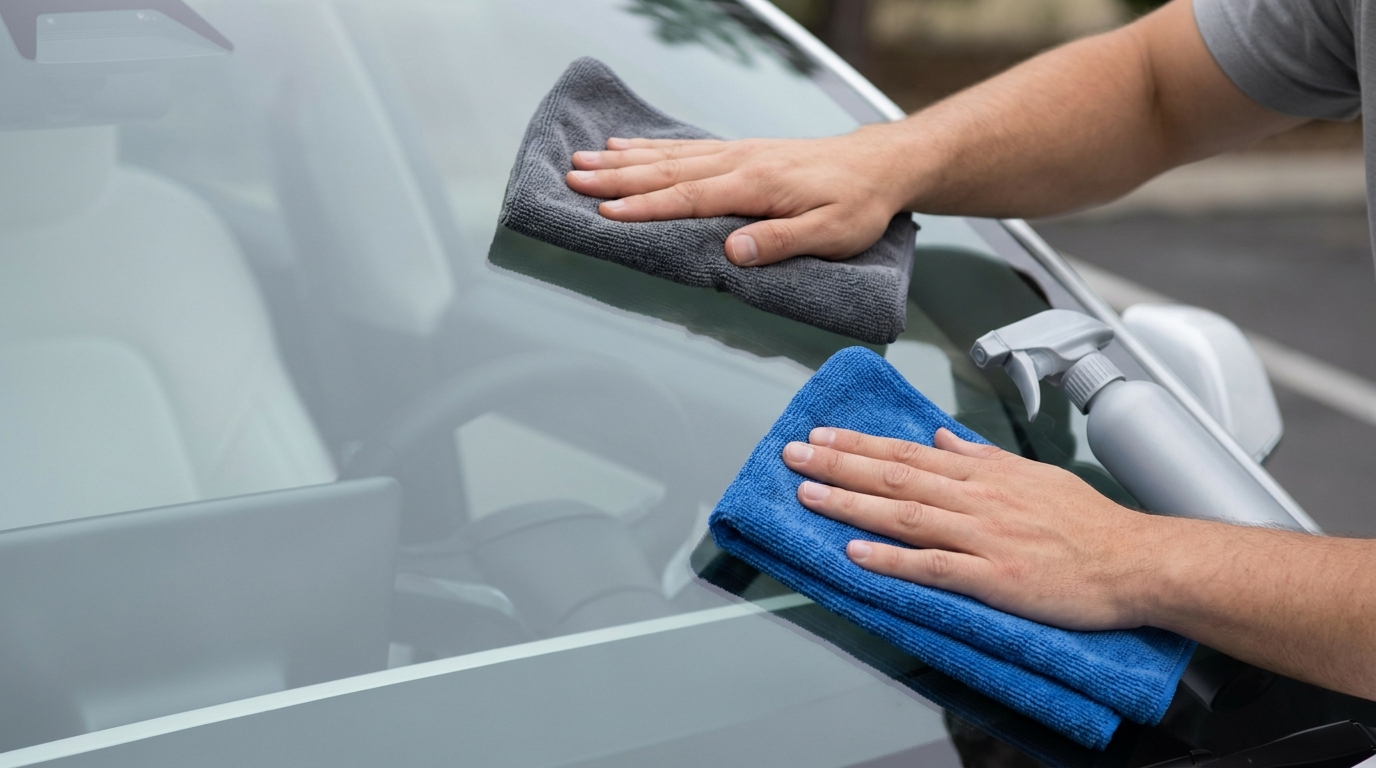
Why this matters: Windex, ammonia, and your interior windshield
What ammonia is and why it shows up in glass cleaners
If you are searching for how to clean car windshield inside streak free, the core issue to understand is whether the cleaner contains ammonia, because ammonia is an ingredient used in many household glass formulas to cut grease and lift film from glass surfaces.
Windex Original lists ammonium hydroxide, a form of ammonia, in its product documentation, which explains why the formula works quickly on greasy residues but also why it is treated cautiously for automotive use where films and interior plastics are present Windex Original product information.

Manufacturers now sell clearly labeled ammonia-free variants intended to provide glass cleaning power without that solvent, and the labeled ammonia-free formulas do not list ammonium hydroxide in their ingredients Windex ammonia-free product information.
How aftermarket and factory window film respond to cleaners
Window film makers recommend avoiding ammonia-based cleaners on aftermarket tints because prolonged use and repeated exposure can risk changes to the film appearance or adhesive over time, so owners with aftermarket tint are usually told to use only ammonia-free products and follow the maker's care instructions LLumar care instructions.
Even on cars without tint, the interior environment includes dashboard plastics, coatings, and touchscreen surfaces that can be harmed by overspray or harsh solvents, so how you apply any cleaner is as important as which cleaner you choose.
To reduce risk to trim and screens, many auto-care guides recommend applying cleaner to a towel rather than spraying directly on the windshield, which helps control where the liquid goes and prevents soaking adjacent materials Safelite guidance on cleaning inside windshields.
Quick streak-free routine you can follow today
Supplies checklist
Gather two clean, lint-free microfiber towels or waffle-weave glass towels, an ammonia free glass cleaner labeled for automotive use, and optionally a bottle of 70 percent isopropyl alcohol for very stubborn haze on untinted glass. Many tint-safe products are available from specialist brands like Invisible Glass.
Choose towels that are dedicated to glass, laundered without fabric softener, and fully dry before use. Avoid paper towels for finishing because they often leave lint or tiny particles that show up when light hits the glass.
Step-by-step: two-towel method and buffing
Work in the shade and park with the windshield cool to the touch; heat and direct sun increase evaporation and cause cleaners to flash dry, which makes streaks more likely and in some product roundups Road & Track.
Start with the first microfiber towel folded to create clean edges; use it dry or very slightly damp to lift loose dust and haze in overlapping horizontal passes. This initial pass removes surface film that can smear when liquid is applied.
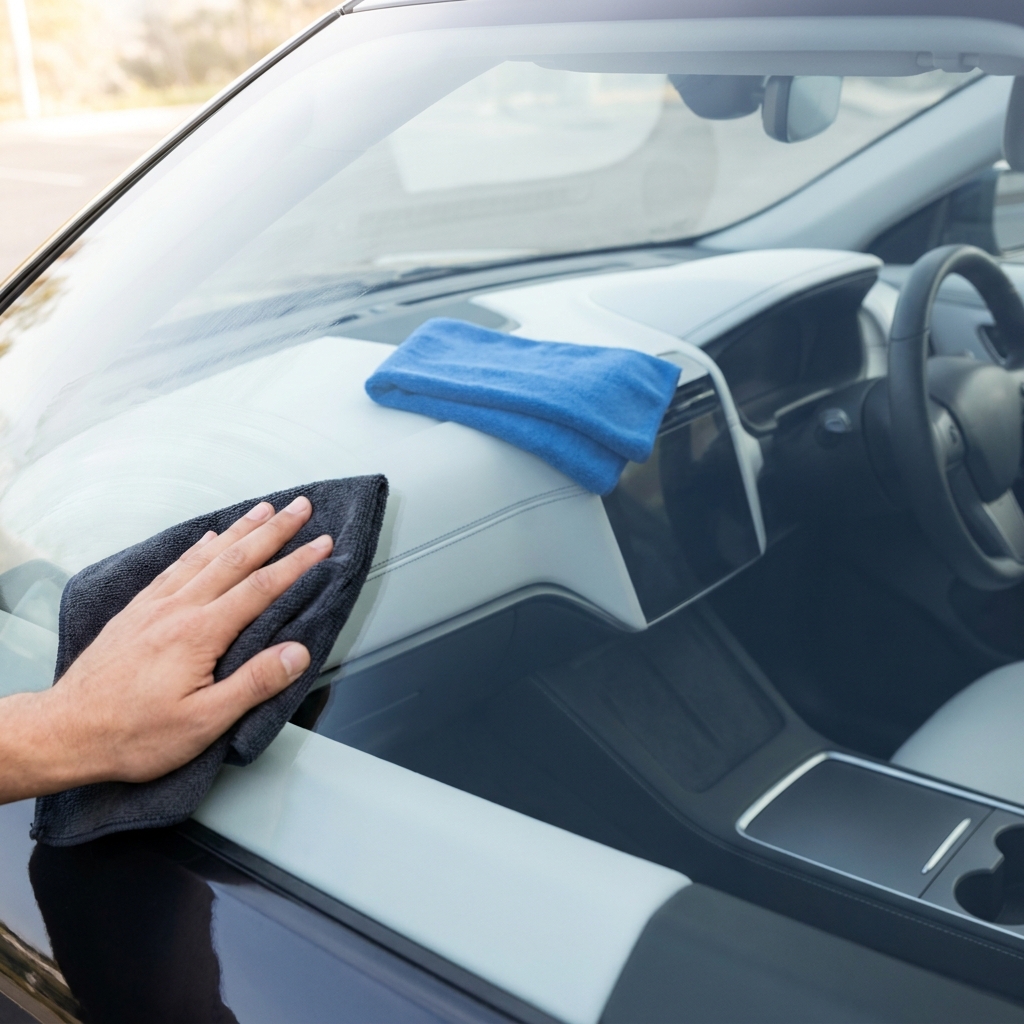
Apply the ammonia free glass cleaner to the second microfiber towel, not to the glass surface. Wring or blot any excess so the towel is damp, not dripping. Clean the glass in small sections with overlapping strokes, then immediately follow each cleaned area with a dry fold of the first towel to buff the surface clear.
Finish by using the dry towel in small circular motions to remove remaining ghosting or edge lines. If you still see streaks, re-clean the affected area with a lightly dampened towel and finish with a dry buff; repeated gentle passes beat a heavy spray every time.
How to decide: tint, factory glass, and which cleaner to choose
When ammonia is acceptable
If your windshield is untinted and you do not have sensitive interior coatings or recent aftermarket films near the glass edges, household ammonia cleaners can clean glass effectively, but they are not the safest first choice because overspray can reach dash plastics and screens.
When ammonia-free is required
For any aftermarket window film, follow the film maker's care recommendations and default to ammonia-free cleaners because major film manufacturers advise that practice to avoid potential damage or discoloration over time LLumar care instructions.
Can I use Windex on the interior of my car windshield?
You can use an ammonia-free Windex variant or another ammonia-free automotive glass cleaner for interior glass; avoid Windex Original on aftermarket tint because it contains ammonia and follow maker care instructions for any film.
Factory-tinted glass can vary by maker and market; when in doubt consult the dealer or the vehicle owner's manual to see whether the factory tint has any specific cleaning restrictions before using alcohol or ammonia-based products. Independent tests and buying guides can also help when choosing a product Car and Driver.
Checking your film maker or dealer guidance
Search the film maker's online care instructions or the installer's documentation for explicit statements about allowed cleaners, and keep a note of any warranty cautions. If the maker or dealer says to avoid ammonia or solvents, choose an ammonia free glass cleaner and follow the two-towel routine to limit contact with trim or seals 3M window film care and maintenance.
Common mistakes that cause streaks or damage
Wrong cloths: lint and residue
Using paper towels or cloths washed with fabric softener is a common source of lint and film; those fibers or residues lift onto the glass and catch light, producing the very streaks you were trying to remove. For guidance on selecting and caring for glass towels see our note on microfiber towels.
A short set of checks to pick the right glass towel
Microfiber glass towels are engineered to grab small particles and oils without leaving residue. Keep a set of towels only for glass so you do not transfer wax, interior cleaner residue, or grit from other cleaning tasks onto the windshield.
Spraying directly and overspray trouble
Spraying cleaner directly at the glass increases the risk the liquid will migrate to the dash, vent openings, or touchscreens and leave films or damage coatings; instead, apply the cleaner to a towel so you can control placement and use less product overall Safelite guidance on cleaning inside windshields.
When a cleaner reaches painted or plastic surfaces incidentally, wipe the area promptly with a clean damp cloth to reduce dwell time, because some formulations can affect trim finishes if left wet for long periods.
Using solvents on tint
Repeated use of strong solvents like ammonia or straight alcohol on aftermarket tint can, over time, risk discoloration or weakened edge adhesion depending on the film type; that is why film makers and professional installers often limit the recommended cleaners and note warranty conditions in their care pages LLumar care instructions.
When cleaning near tinted edges, avoid soaking towels and work with gentle, narrowly focused passes to keep liquids off the adhesive and edge seals.
Troubleshooting: stubborn haze, plasticizer film, and special cases
Dealing with plasticizer outgassing
Plasticizer haze occurs when certain interior plastics slowly off-gas compounds that deposit as a thin film on nearby glass; this film looks like ghosting or milky haze and can be stubborn to remove.
On untinted glass, a light wipe with 70 percent isopropyl alcohol on a microfiber towel can reduce that film, but the best practice is to follow with an ammonia free glass cleaner to remove any residue and then buff dry.
When to use alcohol and how to follow with cleaner
Only use isopropyl alcohol on untinted glass and apply it sparingly to a towel; after wiping, immediately clean the same area with an ammonia free glass cleaner and finish with a dry buff to restore clarity.
Do not use alcohol or ammonia on aftermarket film unless the film maker or installer explicitly states it is allowed, because the film's chemical tolerance is specific to the product and warranty terms.
Factory tint and dealer-installed films
If your car has factory-installed tint or dealer-applied film, consult the vehicle documentation or the installer for care guidance; factory films sometimes have different tolerances than aftermarket films, and the safest route is to use an ammonia free cleaner recommended by the maker.
For persistent haze on tinted glass, contact the film maker or your installer so they can advise on permitted cleaners and whether the haze relates to installation or a material issue that could affect warranty coverage 3M window film care and maintenance.
Practical examples and short scenarios
Example A: Untinted daily driver with dashboard glare
Situation: you see smear lines and ghosting from dashboard reflections. Action: park in shade, dry-wipe with one microfiber to remove dust, then use the two-towel method with an ammonia free glass cleaner and finish by buffing with the dry towel for a clear view.
Tip: if the haze persists from plasticizer film, try a cautious isopropyl alcohol wipe on a corner, then repeat the ammonia free cleaner step to finish the job.
Example B: Car with aftermarket tint and warranty considerations
Situation: you have an installer-applied tint and want to keep the warranty. Action: check the film maker care page and use only ammonia free cleaners the maker lists or those the installer recommends; avoid alcohol or ammonia unless the maker explicitly permits it.
When in doubt, call the installer to confirm acceptable products, and use the two-towel routine to minimize any risk of overspray to edges and seals LLumar care instructions.
Quick checklist you can print
Supplies: two clean glass microfibers, ammonia free glass cleaner, optional 70 percent isopropyl alcohol for untinted glass.
Steps: work in shade, dry-wipe haze, apply cleaner to towel not glass, clean in overlapping passes, finish with a dry buff, and check tint care before using solvents.
Frequently asked questions
Can I use Windex Original on my tinted car windows?
No. For aftermarket window film, use only ammonia-free cleaners unless the film maker explicitly allows ammonia products.
Is it okay to spray cleaner directly on the windshield?
No. Apply cleaner to a microfiber towel instead to avoid overspray on dash, trim, and screens.
How do I remove stubborn haze from the inside of the windshield?
On untinted glass try a light wipe with 70 percent isopropyl alcohol on a microfiber, then follow with an ammonia-free glass cleaner and buff dry; avoid alcohol on tint unless permitted.
A careful, controlled approach reduces the chance of streaks and protects tint and interior surfaces. When in doubt about a specific film or coating, check the maker's care guidance or ask your installer before using ammonia or solvents.
References
- https://www.whatsinsidescjohnson.com/us/en/brands/windex/windex-original-glass-cleaner
- https://www.whatsinsidescjohnson.com/us/en/brands/windex/windex-ammonia-free-glass-cleaner
- https://www.llumar.com/support/care-instructions
- https://www.safelite.com/blog/how-to-clean-inside-windshield
- https://drivenandkept.com/detailing-tools/choose-microfiber-towels
- https://drivenandkept.com/surface-atlas/glass
- https://invisibleglass.com/products/auto-glass-cleaner-spray?srsltid=AU7gw4WLuAHGa8kYqME0aj3NM_BcoKfZqcYlHhIkO6-pt8l1n48G2n-6
- https://www.roadandtrack.com/gear/g70834403/best-car-glass-cleaners-tested-1/
- https://www.caranddriver.com/shopping-advice/g42246787/best-car-glass-cleaners-tested/
- https://www.3m.com/3M/en_US/p/d/b00016164/
- https://drivenandkept.com/seasonal-care/dry-car-without-water-spots
Product options for this topic
As an Amazon Associate I earn from qualifying purchases. These are researched options, not hands-on test results. Check the exact size or model, current price and availability on Amazon.
| Product option | Fit and limits to check | Retailer |
|---|---|---|
| Chemical Guys microfiber towels, blue 12-pack | A pack of 16-inch-square towels for separating cleaning tasks. Check surface suitability and wash without fabric softener. | View on Amazon |