
The journal
Should tires with 5/32 tread be replaced?
how to check tire tread depth explained, and whether 5/32 inch requires replacement. Plan for wet conditions and replace before winter when needed.
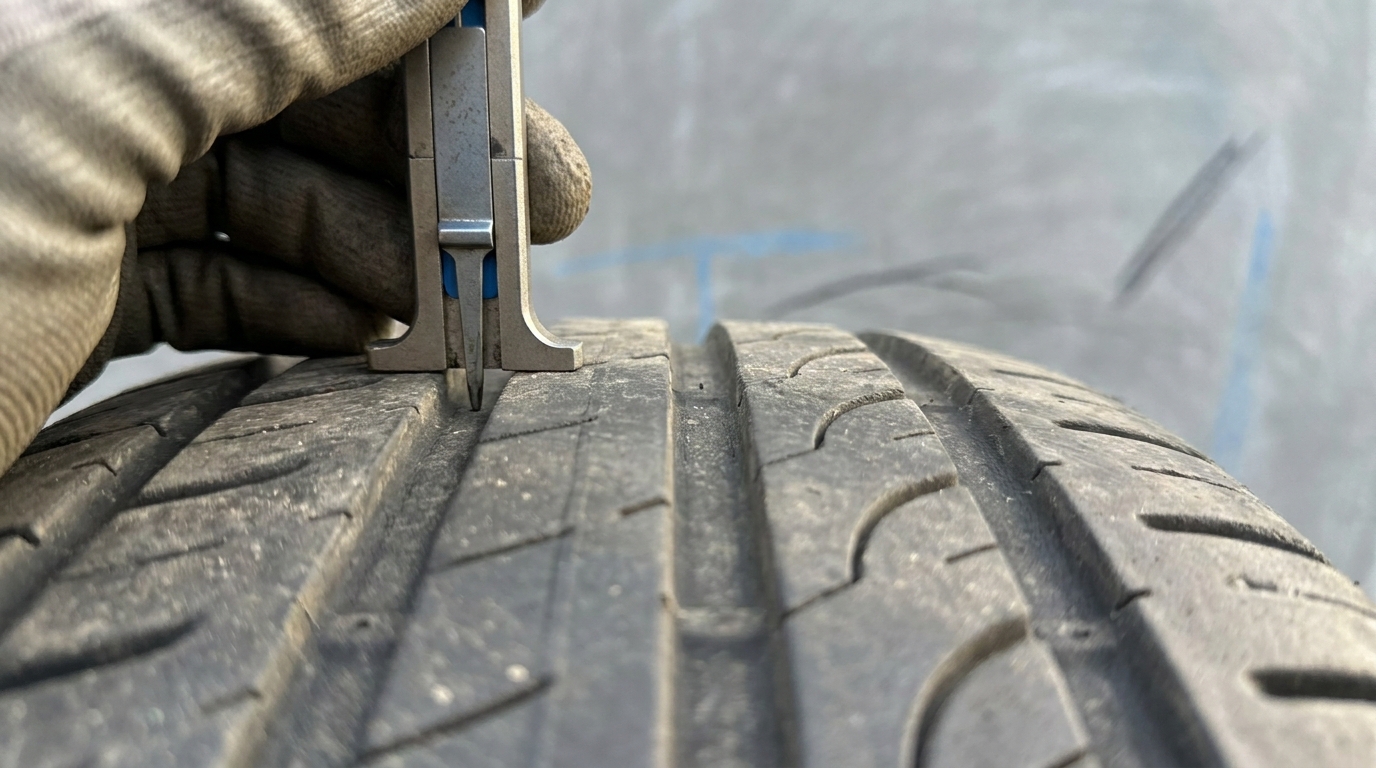
Short answer: does 5/32 inch tread mean you must replace your tires now?
A quick, practical answer is this: no, a 5/32 inch tread reading by itself does not mean you must replace your tires immediately, but it does mean plan ahead and monitor them. For many passenger vehicles in the U.S. the legal end of life is commonly set at 2/32 inch, so 5/32 inch sits comfortably above that legal minimum and is best treated as a midlife reading rather than an emergency.
That legal threshold is the anchor for regulations and consumer guidance, and the National Highway Traffic Safety Administration provides the authoritative guideline that passenger tires are considered worn out at 2/32 inch, which helps explain why 5/32 inch is not an automatic failure point NHTSA.
Even though 5/32 inch is legally acceptable, it often marks the stage where you should plan replacement timing. Industry guidance indicates that wet-road performance begins to decline well before the legal minimum, and organizations that follow tire performance recommend planning earlier replacement in persistently wet climates or ahead of winter use.
Quick verdict
In short, 5/32 inch is not an automatic replace-now rule. It is a signal to schedule closer checks, especially if you expect rain, snow, or heavy highway driving in the near future. For official guidance, see NHTSA. See our care calendar.
What the law says vs what safety testing shows
Legally the commonly cited end-of-life number for passenger tires in the U.S. is 2/32 inch, which is why drivers and inspectors treat that depth as the baseline for replacement; still, testing and practical guidance show performance falls off earlier, so treat 5/32 inch as an intermediate state rather than a final one NHTSA.
Because the gap between safe everyday use and the legal minimum can vary with weather and vehicle use, many drivers use a more conservative planning threshold, especially if rain or snow are common where they live.
How to check tire tread depth accurately
How to check tire tread depth is a basic maintenance task and the most reliable approach is to measure with a calibrated tread-depth gauge, not only to get a precise number but also to repeat the check reliably over time.
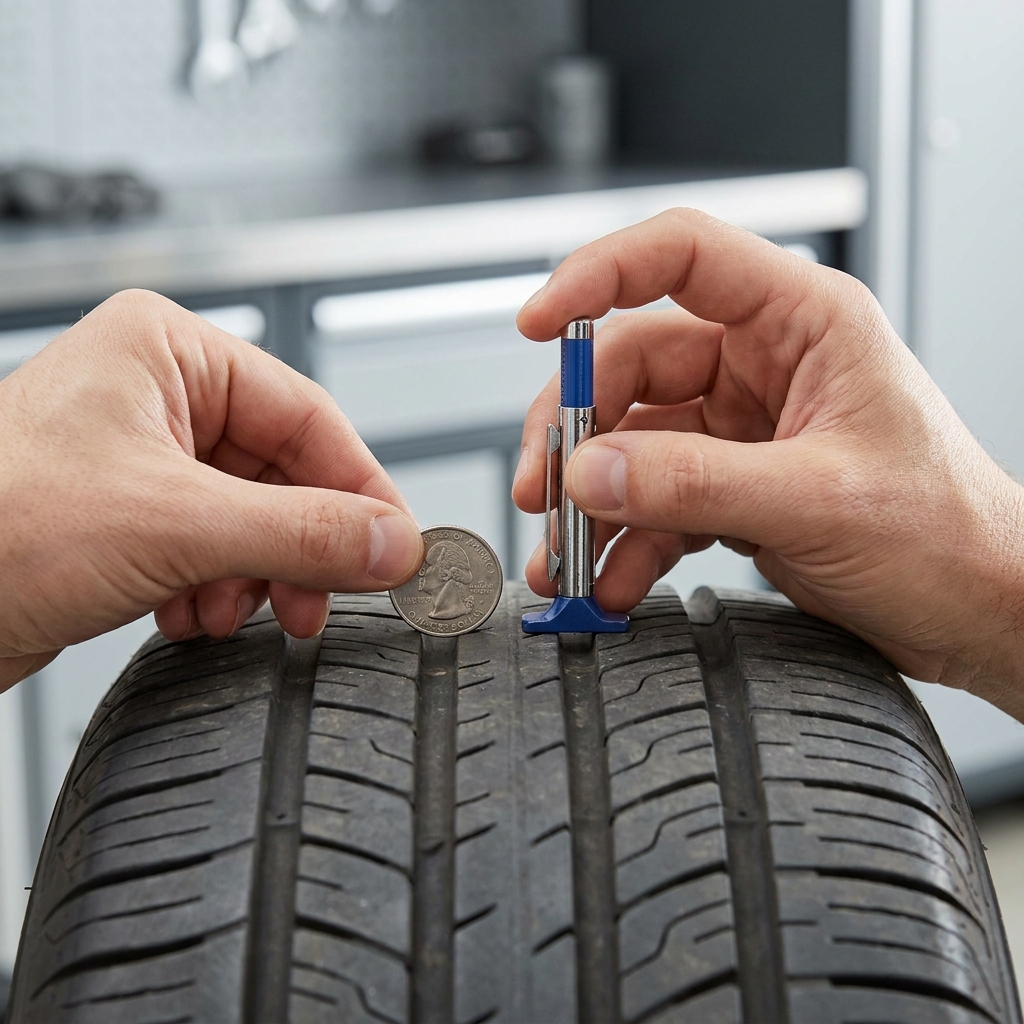
Tools you can use: calibrated tread-depth gauge
A small, inexpensive tread-depth gauge gives a clear numeric reading in 32nds of an inch and is easier to read than visual estimates. To use one, press the probe into a groove until the base of the gauge rests on the tread block, then read the measurement. Take readings at several points around the tire, at least in the middle groove and both shoulder grooves, to detect uneven wear. Consumer advice emphasizes the gauge for consistent checks because coin tests are approximate and wear bars only indicate the final minimum.
Coin tests explained: quarter and penny
The quarter test approximates 4/32 inch and is useful as a quick screen for wet-weather readiness. Insert a quarter into the tread groove with Washington's head down; if the tread does not cover part of the head, you are near 4/32 inch or less. The penny test gives an approximation of 2/32 inch and is the simplest field check for the legal minimum. These coin checks are handy when you do not have a gauge, but they are approximate and should be followed up with a proper gauge if the result is borderline.
Should I replace tires that measure 5/32 inch of tread?
No, 5/32 inch is above the U.S. legal minimum of 2/32 inch and does not mandate immediate replacement, but it is a midpoint that warrants planning replacement sooner if you drive in wet conditions or before winter.
Where and how to measure: multiple grooves and wear bars
Measure in several grooves across each tire, front and rear, not just a single spot. Tread wear indicators or wear bars are molded into the tread and sit level with the tread at about 2/32 inch; when a wear bar is flush with the tread, the tire has reached the legal end of life. Because a single groove can mask uneven wear, cross-check multiple positions and record the readings so you can compare them over time NHTSA.
For an accurate household check: clean the grooves of debris, use a gauge for numbers, and note differences between left and right tires. If readings vary by more than a few 32nds between grooves, have a professional inspect the tires and alignment.

What 5/32 inch means for safety in wet and winter conditions
Wet braking and hydroplaning: what tests show
Tests and safety analyses show that wet braking distance and hydroplaning resistance decline well before the legal 2/32 inch threshold; as a practical result, many consumer and safety organizations recommend replacement closer to 4/32 inch if you frequently drive in rain or on wet roads. This means a tire at 5/32 inch is usable, but it is only one small step above a depth where wet performance is noticeably reduced AAA Foundation for Traffic Safety.
Winter traction and why 5/32 is used as a benchmark
For snow traction, authorities and technical guidance often use a higher recommended minimum, roughly around 5/32 inch, because tread depth materially affects the tire's ability to bite into snow and channel slush. If your tires measure 5/32 inch and you expect winter driving, plan to replace them before the season so you begin winter with deeper tread Transport Canada.
How climate and driving habits change the safe threshold
Think in terms of use case. In dry, arid regions a tire with 5/32 inch may provide adequate life for many additional miles because hydroplaning risk is low and braking on dry pavement does not deteriorate as quickly with tread loss. Conversely, if you live where rain, standing water, or slushy winter roads are common, treat 5/32 inch as a limit that triggers replacement planning. That practical, climate-based view reflects both testing and product guidance from industry groups. For additional guidance see USTMA tire care essentials.
When to replace immediately regardless of tread reading
Safety-critical defects to watch for
Sometimes tread depth is irrelevant because the tire's structure is compromised. Replace a tire immediately if you see a sidewall bulge, exposed cords, large cuts that reach the inner plies, separated tread, or other clear structural damage. These are non-negotiable safety defects that require immediate removal and professional inspection NHTSA.
Uneven wear patterns that require immediate attention
Severe uneven wear such as cupping, rapid inner-edge wear, or large differences between left and right tires indicates a mechanical or alignment problem. Even if one tire reads 5/32 inch, extreme asymmetry in wear can make that tire unsafe. In those cases, stop driving long distances on the vehicle and get a professional assessment.
Regulatory exceptions for commercial vehicles
Legal thresholds vary by application. For commercial vehicles, federal regulations require deeper tread on certain axles, for example 4/32 inch on steer axles, while other positions may use the 2/32 inch minimum. That rule reflects how critical wheels that steer or carry heavier loads are held to a stricter standard eCFR 49 CFR § 393.75.
quick pre-drive structural tire check
If you must drive with 5/32 tread: short-term precautions and maintenance
Adjust driving behavior for wet roads
If you need to drive on tires that measure about 5/32 inch, reduce risk by slowing down in rain, increasing following distance, and avoiding standing water and hard braking. These adjustments do not restore grip to a new-tire level, but they reduce the chances of hydroplaning and give you more time to react. Consumer guidance and testing point out that wet braking performance degrades progressively, so conservative driving is the right short-term response.
Maintenance steps to slow wear and extend safe use
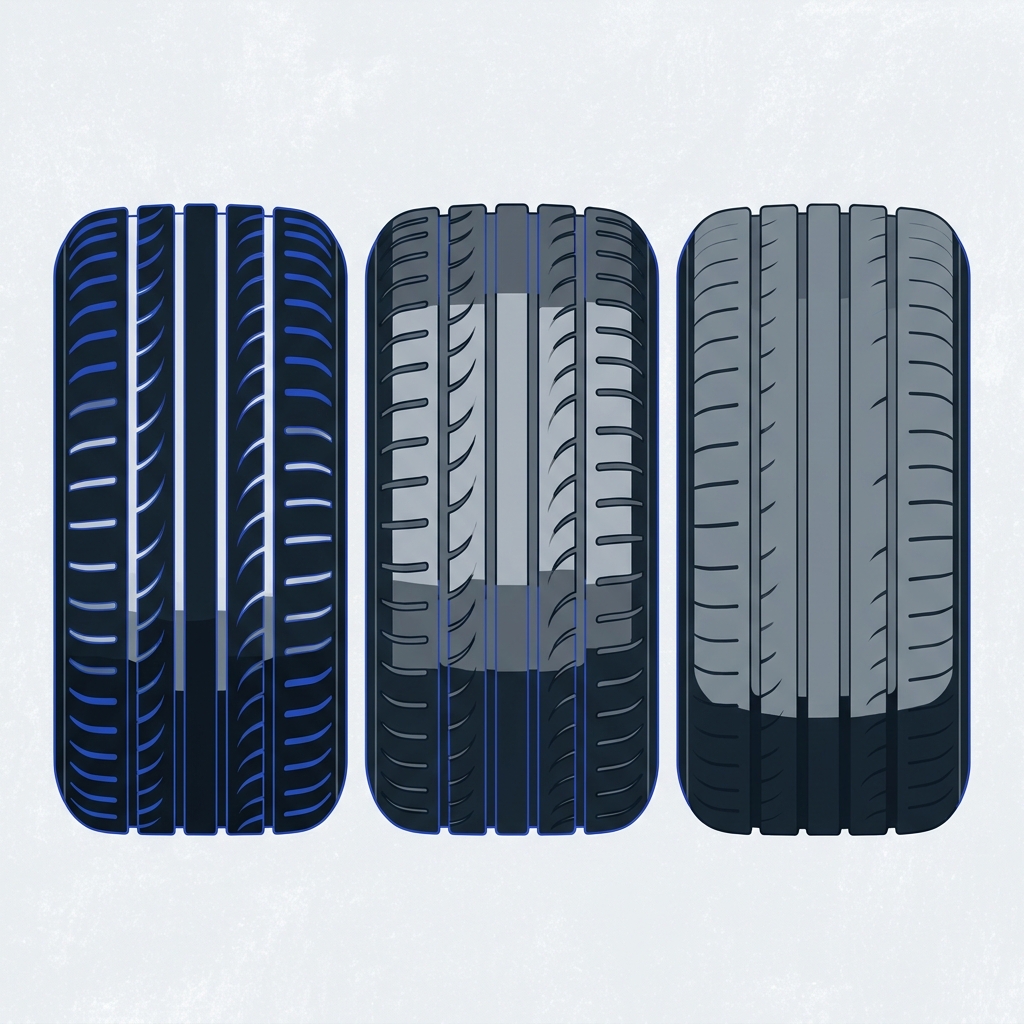
Use basic maintenance to slow wear: keep tires inflated to the vehicle manufacturer recommended pressure, rotate them at the service interval, and correct wheel alignment if you see uneven wear. A well-maintained tire that measures 5/32 inch will wear more predictably and give you cleaner signals about when to replace.
Plan replacement timing and shop checklist
Decide on a replacement window based on climate and mileage. In wet climates aim to replace at or near 4/32 inch rather than waiting to 2/32 inch. If winter is coming and your tires read 5/32 inch, replace them before the season for reliable snow traction. When shopping, take a recent tread measurement and note any uneven wear so the installer can recommend the right tire type for your conditions.
Decision checklist and next steps: how to choose replacement timing and tires
Simple decision checklist to print or save
Use this short actionable checklist to convert your readings into decisions. If any of these apply, follow the recommended action.
- Any structural damage observed: remove the tire and get a professional inspection immediately.
- Tread at or below 2/32 inch or wear bars visible: replace now.
- Tread around 4/32 inch and frequent wet driving: plan replacement soon, do not delay long-term use.
- Tread at about 5/32 inch and winter expected: replace before the season.
- Tread at 5/32 inch and dry climate, no structural issues: monitor monthly and rotate as scheduled.
How to choose a replacement based on use-case
Match the replacement tire to your driving environment. If you regularly encounter snow or slush, consider winter tires or higher-traction all-season tires with deeper siping. For predominantly dry climates a long-life all-season tire with good wear ratings is sensible. Share your recent tread readings and vehicle use with the installer so they can recommend a model that fits your needs and budget and consult our Surface Atlas.
Where to get a professional check
If you are unsure about a reading or spot unusual wear patterns, ask a trained technician to mount and inspect the tire. A professional check can confirm structural integrity, measure tread across multiple grooves under load, and advise on whether the wear points to alignment or suspension issues. Keep a record of readings and rotations so you can track rate of wear over time NHTSA. See our resources for help locating a local shop.
Final encouragement and priorities
Tire tread depth is a clear, measurable signal for safety. Treat 5/32 inch as a planning point not a panic point. Replace sooner if you face wet roads or winter conditions, replace immediately for structural damage, and use simple checks and a small gauge to keep track of the numbers so you can act in time.
Frequently asked questions
Is 5/32 inch the legal limit for tire tread?
No. In the U.S. the commonly cited legal end of life for passenger tires is 2/32 inch. A reading of 5/32 inch is above that legal minimum but may call for earlier replacement depending on conditions.
How can I measure tread depth at home?
Use a calibrated tread-depth gauge for accurate readings, or use coin checks as a quick approximation: a quarter approximates 4/32 inch and a penny approximates 2/32 inch.
When should I replace tires with 5/32 inch for winter?
If you expect snow or icy conditions, plan to replace tires that measure about 5/32 inch before the winter season for better traction.
Use a small tread gauge and a monthly check to track wear, and treat 5/32 inch as a planning point rather than an emergency. Replace for structural damage immediately and prioritize earlier replacement when rain or snow are likely. If in doubt, get a professional inspection so you can drive with confidence and clear guidance.
References
- https://www.nhtsa.gov/equipment/tires
- https://www.nhtsa.gov/vehicle-safety/tires
- https://www.ustires.org/tire-care-essentials
- https://www.ecfr.gov/current/title-49/subtitle-B/chapter-III/subchapter-B/part-393/subpart-G/section-393.75
- https://drivenandkept.com/tools/care-calendar
- https://drivenandkept.com/resources
- https://drivenandkept.com/surface-atlas