
The journal
What can I use to clean my backup camera on my car?
Check the actual vehicle’s reversing-camera instructions before using water or a cloth: some exposed lenses must be rinsed without wiping.
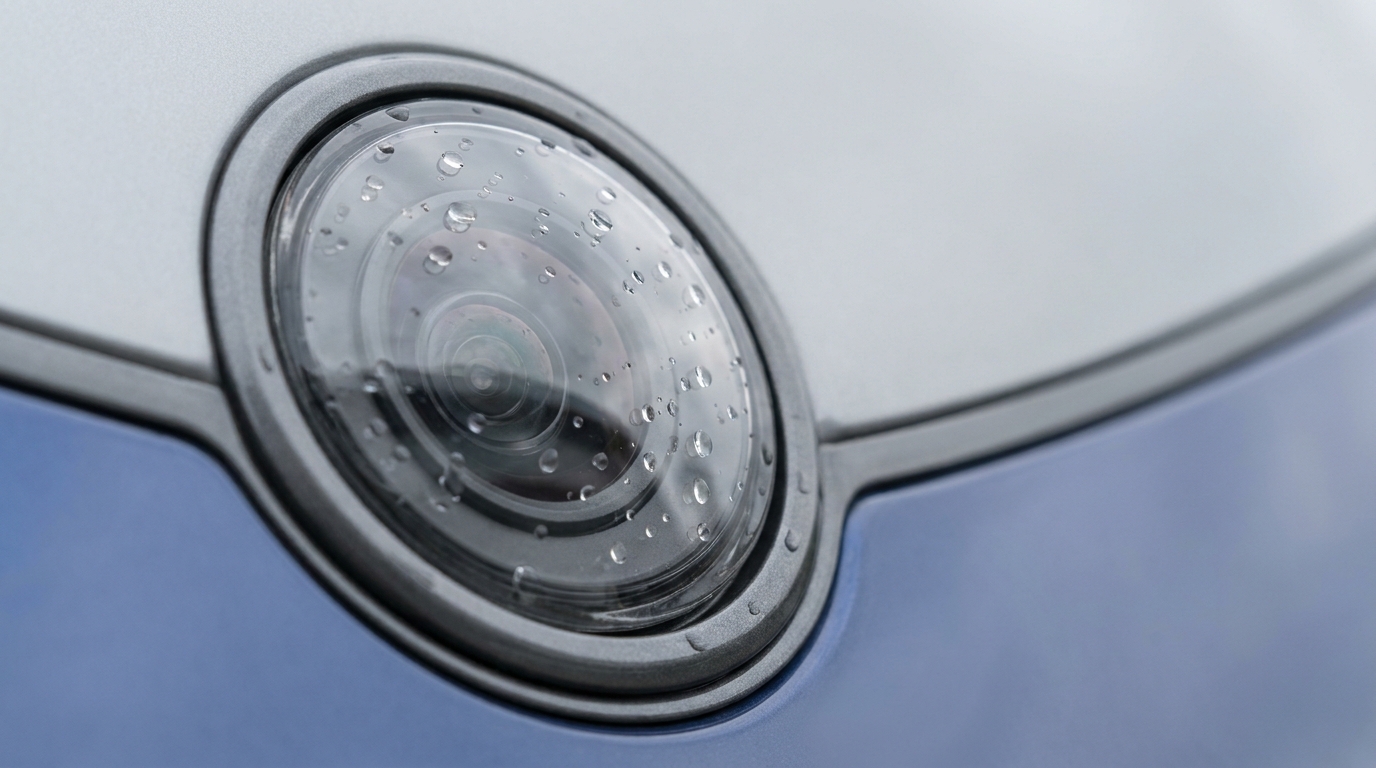
Use the cleaning method specified for the exact camera and vehicle. Clean water may be part of it, but a microfiber cloth, cotton swab or detailing brush is not universally approved for touching an exposed camera lens. Some makers explicitly instruct owners to rinse particular cameras without wiping them.
Why one lens-cleaning method does not fit every car
The Tesla Model S cleaning manual gives a useful counterexample: its instructions distinguish vehicles built before approximately January 12, 2023 from later builds. For the earlier group it specifies spraying water and avoiding contact with the lens using hands or a cloth; later-build instructions allow a dry microfiber cloth after spraying. Follow the applicable manual for the actual vehicle, not that example’s date on another model.
Likewise, a washer for a digital-mirror camera is not automatically the washer for the reversing camera. Confirm which camera and housing the instructions cover before copying a control sequence or adding a hand-cleaning step. A factory washer does not itself mean wiping afterward is required.
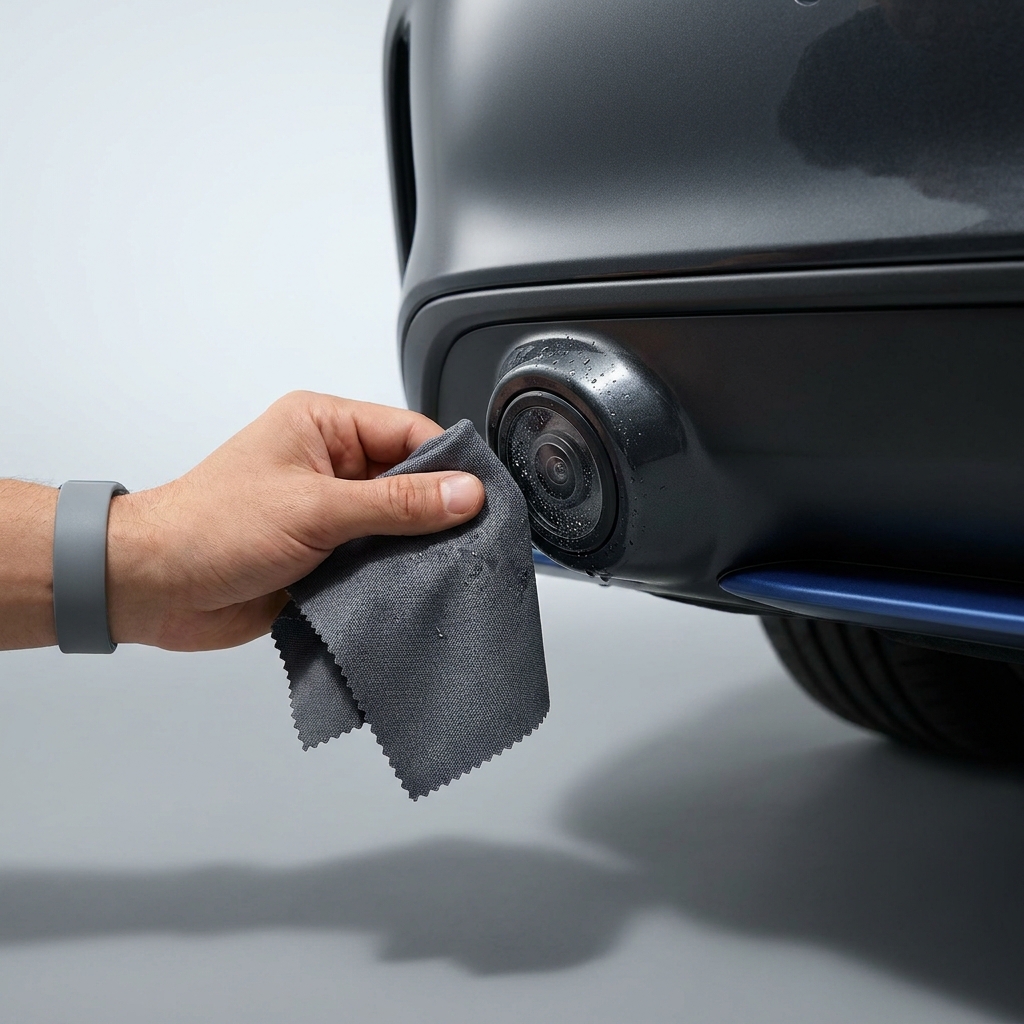
Prepare the vehicle safely
Park securely and apply the parking brake as instructed before stepping outside. Do not leave the car in Reverse merely to keep the image on screen while you work behind it. Use the documented stationary checking method from the driver’s seat after cleaning.
Locate the actual reversing-camera cover and inspect it without scraping. Dust, dried splash and moisture can reduce the image, but a blank feed, damaged housing, condensation inside or a persistent warning may need diagnosis. Cleaning is not a repair for every camera fault.
Use the approved method gently
- Find the camera-cleaning section for the exact model and build, including any coating restrictions.
- If an approved camera washer is fitted, operate it only as documented and confirm which camera it serves.
- If hand cleaning is permitted, use the specified water, cloth and sequence. Avoid rubbing grit over the cover or using a tool simply because it is soft.
- Keep pressure jets, abrasives, solvents and unapproved glass cleaner away from the camera. Do not add polish, water repellent or another coating unless approved.
- Recheck safely. If the image remains poor, stop escalating the cleaning and arrange appropriate inspection.
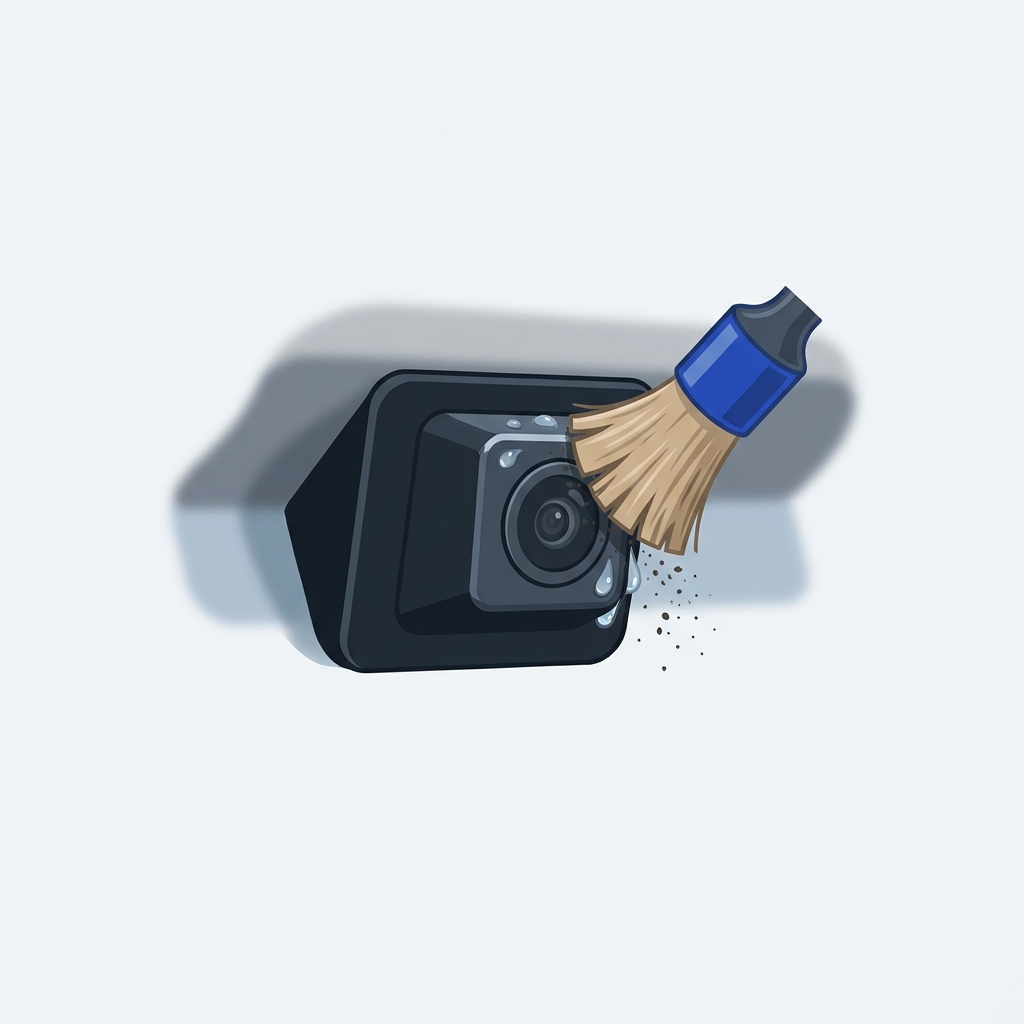
A useful before-and-after check
Suppose dried road splash is visible on the camera cover. After the approved rinse or wash, compare the stationary image with the original view. Improvement suggests dirt contributed, but it does not establish that the whole camera system is fault-free or replace a direct surroundings check before reversing.
If the exterior is clean but a hazy patch remains inside, do not keep rubbing the outside or introduce stronger chemicals. Record the symptom and seek model-specific service advice. Similarly, avoid promising a one-minute fix: drying, permitted access and the fault itself vary.
Keep the recommended cleaning supplies separate from polishing or wheel-cleaning tools so that grit and chemical residue are not transferred to the camera area. When the manual prohibits wiping, that restriction still applies even to a newly washed cloth.
Check before cleaning a reversing camera
