
Match the shade to the exact vehicle and windscreen layout. Coverage, shape, mirror and sensor clearance, storage and ease of fitting all matter. Use it as a parked-car accessory and remove it before driving.
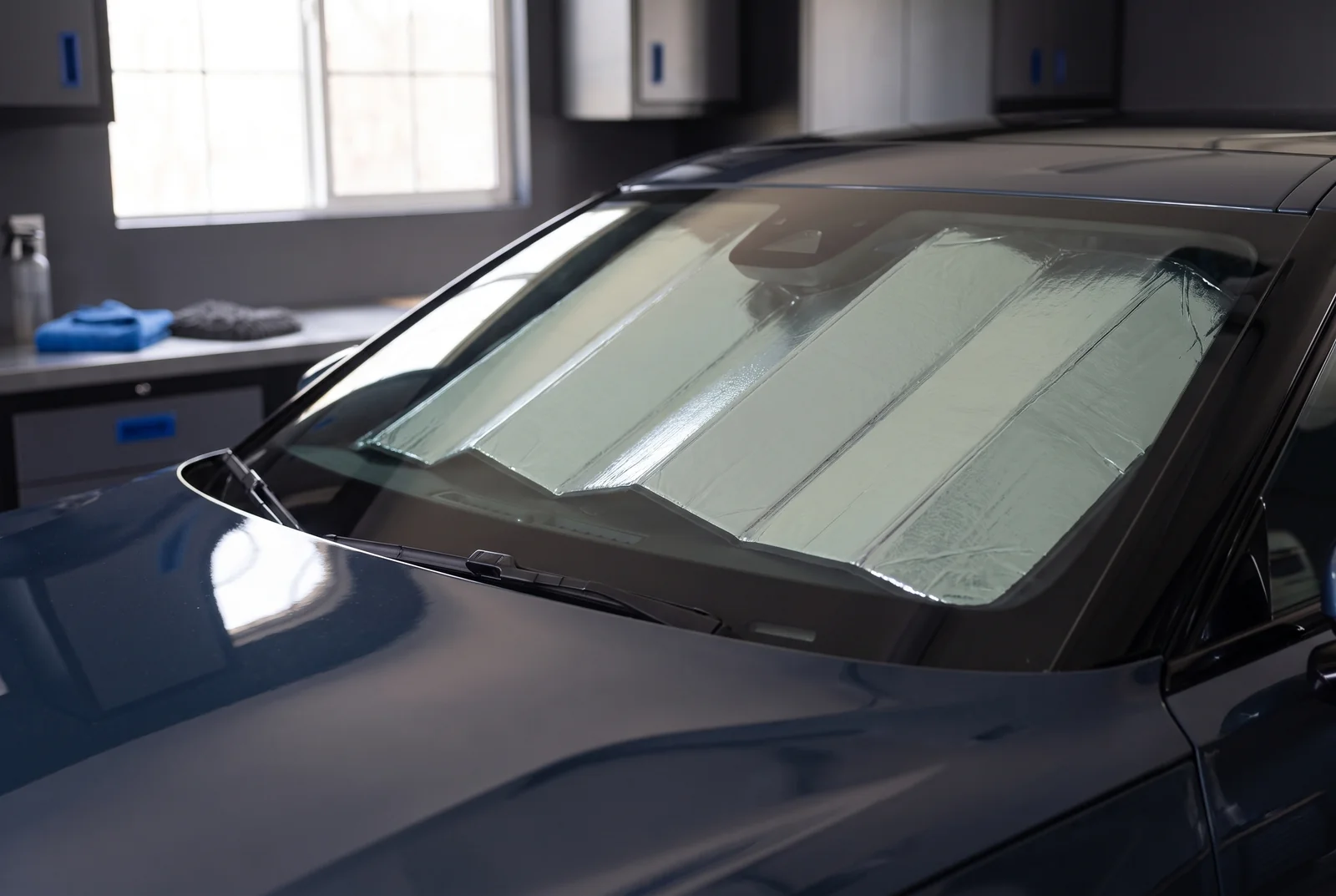
Choose by the job
| Decision | Why it matters | What to check |
|---|---|---|
| Vehicle fit | Windscreens differ by model and generation | Use the exact manufacturer selector |
| Mirror and sensors | Cutouts and clearance may be needed | Check the actual windscreen layout |
| Storage | Determines whether you will use it regularly | Try the folded size and securing method |
| Condition | A damaged or awkward shade can be inconvenient | Inspect fit without forcing it |
Begin with the exact vehicle
A model name can span several windscreen shapes. Use the correct year, generation and body style in a manufacturer’s selector, then confirm any option differences it asks about. A photo of a similar car is not a fitment result. WeatherTech’s SunShade range, for example, uses vehicle selection for its custom-fit products.
Look around the mirror area
Mirror mounts and sensor housings can change the space available. Check cutouts and installation directions for the product version. Do not force a shade around a housing or assume the supplied photograph shows every variant. If the listing is unclear, obtain confirmation before ordering.
Think about daily handling
Decide whether the folded or rolled shape fits a convenient storage location. The most elaborate shade is not useful if it is difficult to store every time you drive. Compare the windshield-only and multi-window kit separately; more pieces add coverage but also setup and storage.
Treat it as a parked-car accessory
Remove and store the shade as directed before driving. Do not use reduced heat as a safety guarantee for people or animals in a parked car. The purchase decision should rest on correct fit and a usable routine, not an unverified promise of a particular temperature drop.
Make the choice useful
Buy around the parked-car routine: how often you fit it, where you store it and whether it is easy to remove completely. Do not promise an exact temperature reduction without a relevant, reproducible test. A sunshade is not a reason to leave a person or animal in a parked vehicle, and it does not replace safe decisions about heat exposure.
Before the next session
Remove the windscreen shade completely before driving so it does not obstruct visibility or interfere with operation. Follow the product’s directions for parked use, fitting and storage.
ILLUSTRATIVE EXAMPLE
A practical example
A shade listed for one model year may not suit a revised windscreen or a different body style. Compare the actual vehicle version in the selector rather than choosing on brand name alone. A generic size can also need careful measurement and a suitable return option.
Your next steps
- Confirm the vehicle: use the exact version
- Check the layout: account for mirrors and sensors
- Plan storage: remove fully before driving
Questions that come up
Are custom-fit and universal shades the same?
No. A custom-fit product is selected for specified vehicle details; universal products require their own dimension and fit checks.
Can I compare temperature claims without a test?
Conditions such as sun, glass, orientation and ventilation affect results. A product claim is not our independent measurement.
Can I leave a sunshade in place while driving?
Remove the windscreen shade completely before driving so it does not obstruct visibility or interfere with operation. Follow the product’s directions for parked use, fitting and storage.
Sources and further reading
Source references for this edition, September 8, 2026. Recheck changeable rules and the exact product or vehicle instructions before acting.