
Begin with the vehicle’s approved procedure and battery system. Match voltage, chemistry and the product’s stated application before comparing size or advertised amps. A portable jump starter is equipment with specific limits, not a universal fix for every vehicle that will not start.
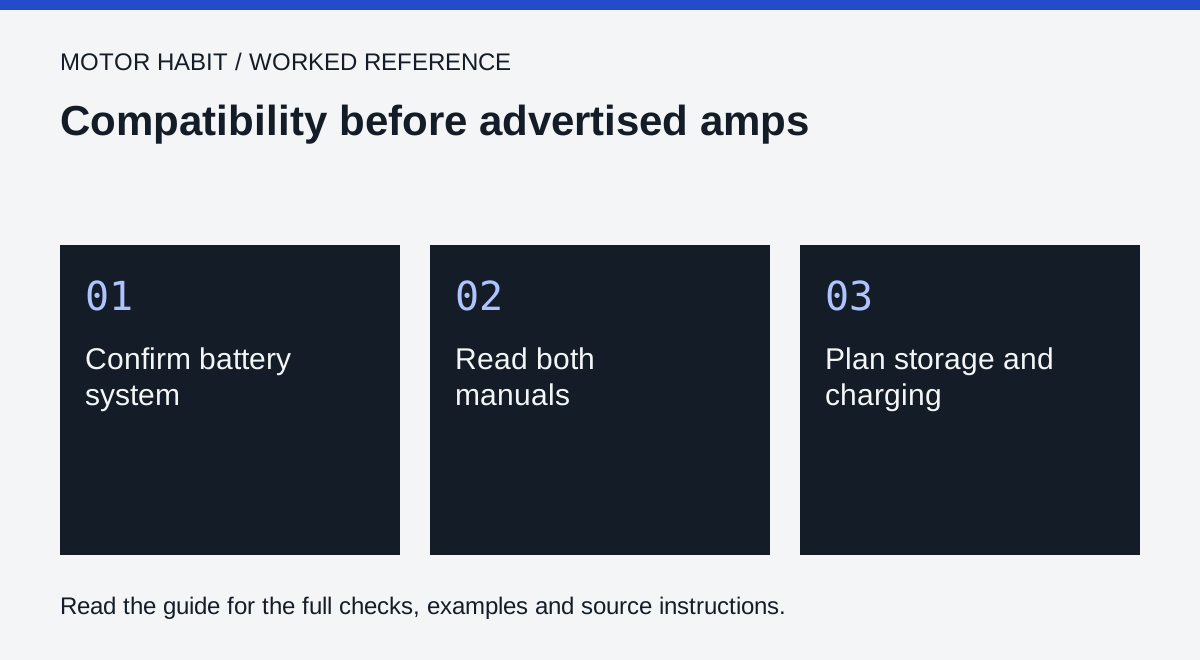
Choose by the job
| Decision | Why it matters | What to check |
|---|---|---|
| Battery system | Voltage and chemistry must match | Read vehicle and device specifications |
| Application | Engine and vehicle guidance may differ | Check the exact product’s limits |
| Approved procedure | Connection points and exclusions vary | Use the vehicle manual |
| Storage and charging | The device needs ongoing care | Follow temperature and charging instructions |
Start with the system, not the biggest number
Read the vehicle’s jump-starting guidance and identify the battery system before comparing devices. A product intended for one voltage or battery chemistry should not be generalized to another. Hybrids and electric vehicles can have model-specific procedures that require particularly careful checking.
Compare the exact manufacturer specification
NOCO describes the GB40 for specified 12 V lead-acid applications and gives separate gasoline and diesel engine limits. Those details are more informative than treating a headline amp figure as a universal vehicle-size calculator. Use the current specification and manual for the actual product you are considering.
Consider readiness and storage
A rechargeable recovery device needs a charging and inspection routine. Read its storage conditions, recharge instructions and included accessories. A unit forgotten in unsuitable conditions may not be ready when needed. Confirm that the clamps and connection method suit the vehicle under both manufacturers’ guidance.
Keep recovery procedures with the vehicle
This is a buying checklist, not a generic clamp-connection tutorial. Use the vehicle’s approved procedure and the device manual, and obtain qualified help if the battery condition or system is unclear. Do not improvise with a damaged battery or treat a jump starter as a repair for a recurring electrical problem.
Make the choice useful
Budget for a device you can keep charged and store as instructed. Check supplied accessories, connector condition, available instructions and manufacturer support. An advertised peak-amp figure does not replace the application limits or a comparable performance test. Do not use an unknown recovery method when the vehicle manual prohibits it or when the battery is damaged; use the appropriate assistance service.
Before the next session
No. It does not diagnose or repair the underlying cause of a starting problem. Repeated trouble needs assessment of the battery, charging system or other relevant components by a qualified service provider. Follow both manuals for any permitted use.
ILLUSTRATIVE EXAMPLE
A practical example
Two vehicles of similar size may have different electrical systems and approved recovery procedures. A product recommended for one owner is not automatically suitable for the other. Make a compatibility note from both manuals before deciding which specification-led shortlist is relevant.
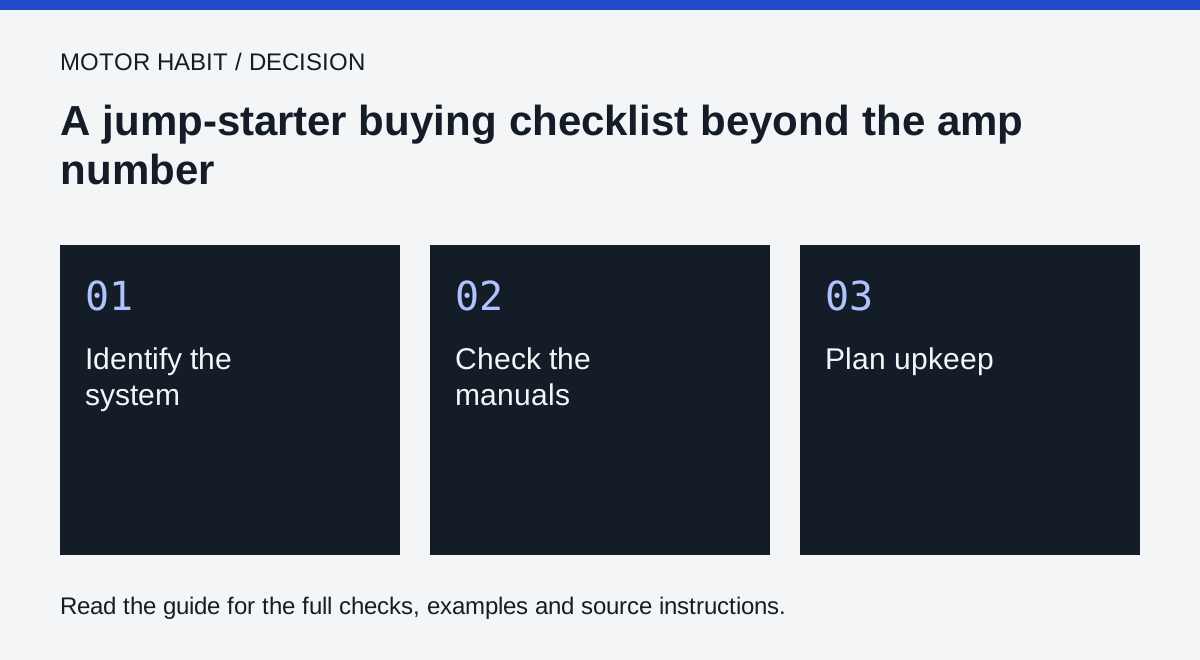
Your next steps
- Identify the system: confirm voltage and chemistry
- Check the manuals: verify the approved application
- Plan upkeep: store and charge as instructed
Questions that come up
Does a higher amp number prove a better match?
No. Voltage, battery chemistry, engine guidance, product limits and the vehicle’s instructions all matter.
Is a jump starter the same as a battery charger?
They serve different primary jobs. Use the exact product instructions; do not assume a brief starting device can replace an appropriate charging process.
Can a jump starter repair an unhealthy battery?
No. It does not diagnose or repair the underlying cause of a starting problem. Repeated trouble needs assessment of the battery, charging system or other relevant components by a qualified service provider. Follow both manuals for any permitted use.
Sources and further reading
Source references for this edition, September 8, 2026. Recheck changeable rules and the exact product or vehicle instructions before acting.