
Compare the cost of the labelled dose for the same washing method. Bottle price and apparent size are not enough. Keep bucket and foam instructions separate, include shipping where relevant and identify any concentrate left after the final full dose.
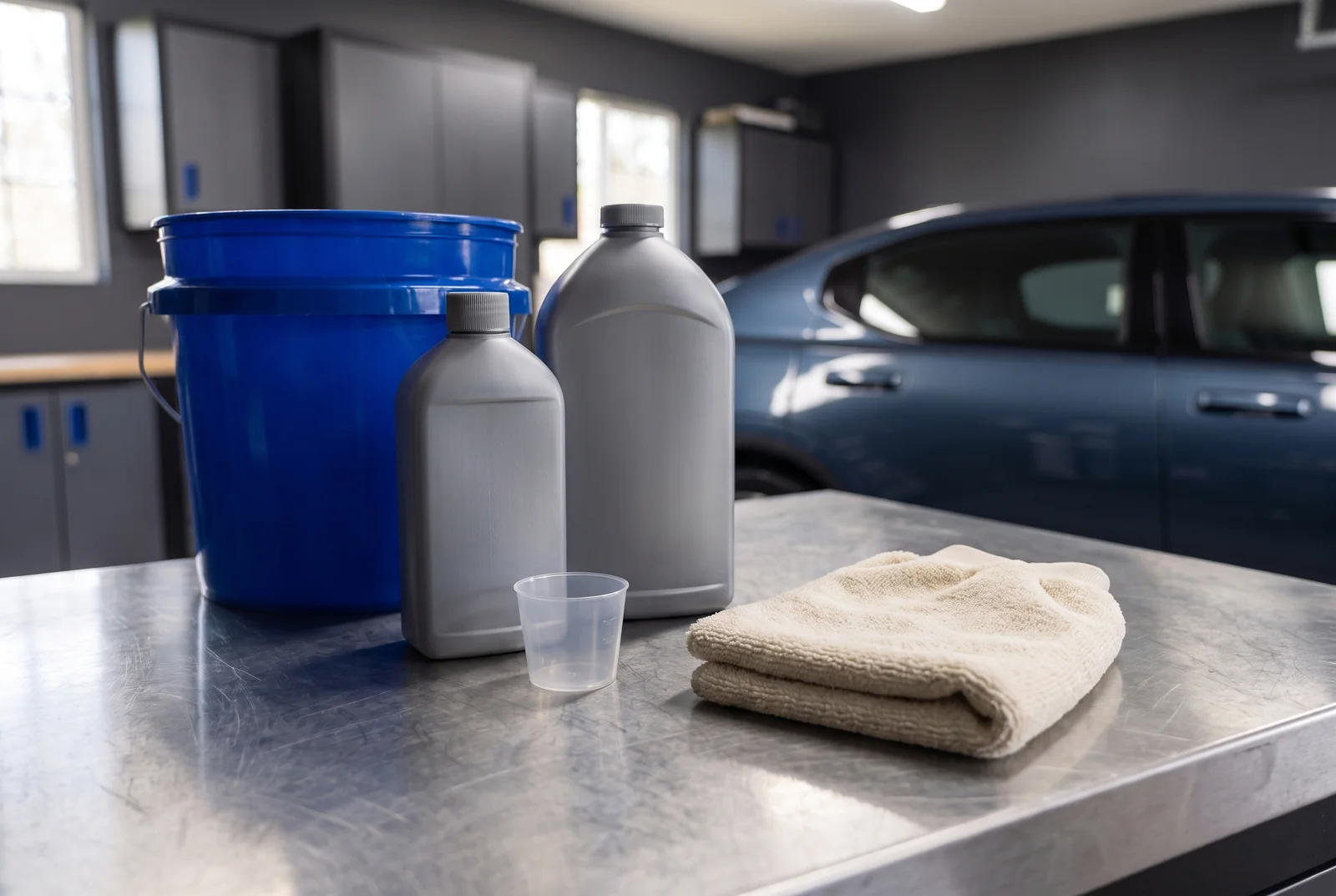
Choose by the job
| Decision | Why it matters | What to check |
|---|---|---|
| Purchase cost | Changes the total cost basis | Use the actual price paid |
| Bottle volume | Must use the same units as dose | Convert litres and mL consistently |
| Dose per session | Determines theoretical usage | Use the labelled method |
| Remainder | May not be enough for a full session | Count whole washes separately |
Compare the same cleaning method
A shampoo may give different instructions for a bucket and foam equipment. Compare products using the method you will actually use and the labelled dose for that method. A cheaper bottle can cost more per wash if it is smaller or requires more concentrate.
Use price, volume and dose together
An illustrative 1,500 mL bottle costing $18 with a 30 mL dose contains 50 full doses. That works out to $0.36 of shampoo per wash. The calculator lets you use your actual purchase price and dose. It does not treat the amount of water in a bucket as concentrate consumed.
Separate cost from suitability
A low cost per wash is useful only for a product compatible with the finish and method. Do not reduce the labelled concentration to make a comparison look better. Do not increase it merely because a foam photograph looks impressive. Follow the surface, product and equipment instructions.
Be honest about the whole job
The result covers one consumable. Water, electricity, towel laundry, other chemicals and your time remain separate. If there is concentrate left after the final full dose, the calculator reports it rather than rounding it into another wash. Use the result as one decision factor alongside a workable routine.
Make the choice useful
Keep a record of what the comparison includes. A discounted larger bottle can be attractive, but only if it suits the method, storage and amount you will use. Do not reduce the dose below the product’s instructions to make a spreadsheet result look better. A more expensive compatible product may still be the appropriate choice when the cheaper one does not suit the finish or delivery system.
Before the next session
No. Cost is one comparison dimension after compatibility and suitability have been established. Cleaning performance, handling, preparation and the required method are separate questions. A calculated low dose cost is not a product-test result.
ILLUSTRATIVE EXAMPLE
A practical example
An illustrative 1,000 mL bottle costing 16 currency units at 30 mL per wash has a consumed-product cost of 0.48 per wash. It supplies 33 complete doses and leaves 10 mL. This calculation does not include water, equipment, shipping or waste unless you add those costs separately.
Your next steps
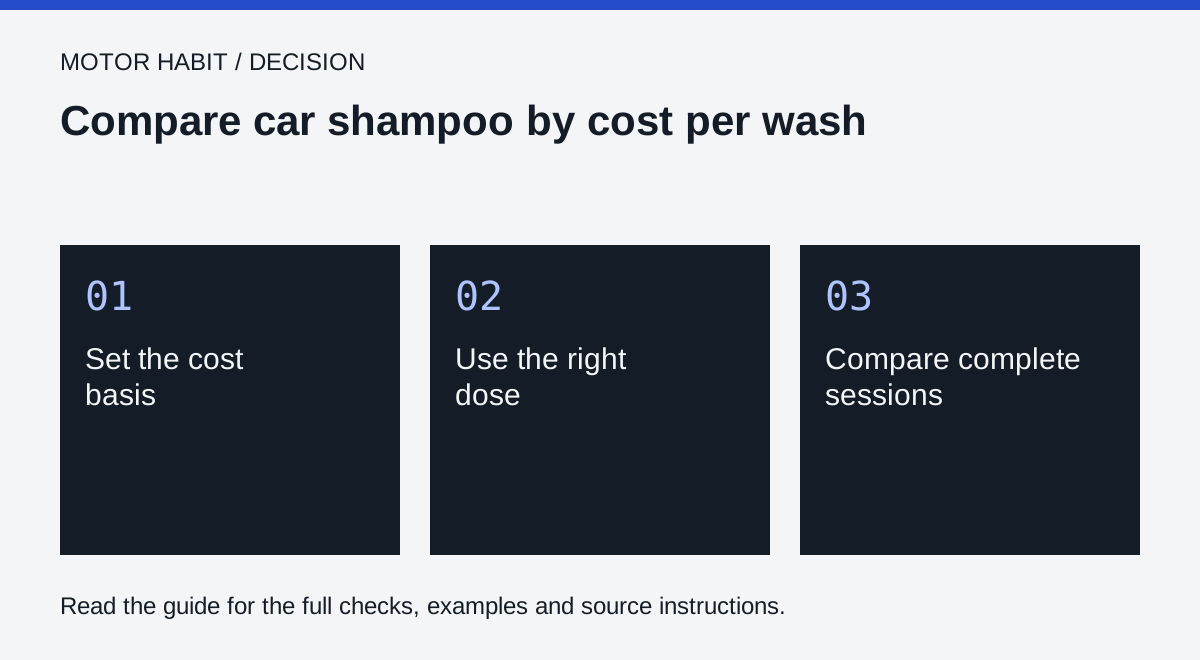
- Set the cost basis: use the real purchase
- Use the right dose: match the washing method
- Compare complete sessions: account for leftovers
Questions that come up
Does a bigger bottle always cost less per wash?
No. Compare the price per usable labelled dose, including bottle volume.
Does changing currency convert my price?
No. The tool changes the currency label only. Enter the price you actually pay in that currency.
Does the cheapest cost per wash identify the best shampoo?
No. Cost is one comparison dimension after compatibility and suitability have been established. Cleaning performance, handling, preparation and the required method are separate questions. A calculated low dose cost is not a product-test result.
Sources and further reading
Source references for this edition, September 8, 2026. Recheck changeable rules and the exact product or vehicle instructions before acting.