
Start with the finish, the conditions and a complete drying plan. Use products labelled for the surface, keep wheel tools separate from paint tools and work in sections without letting the solution dry. A good routine is controlled and repeatable.
Choose by the job
| Decision | Why it matters | What to check |
|---|---|---|
| Finish | Paint, film and matte surfaces differ | Read the vehicle or installer instructions |
| Conditions | Heat and drying affect working time | Use the product’s stated conditions |
| Wash media | Contamination moves with the tool | Separate wheel and paint equipment |
| Drying | Water remains after rinsing | Have clean drying media ready |
Set up before the car gets wet
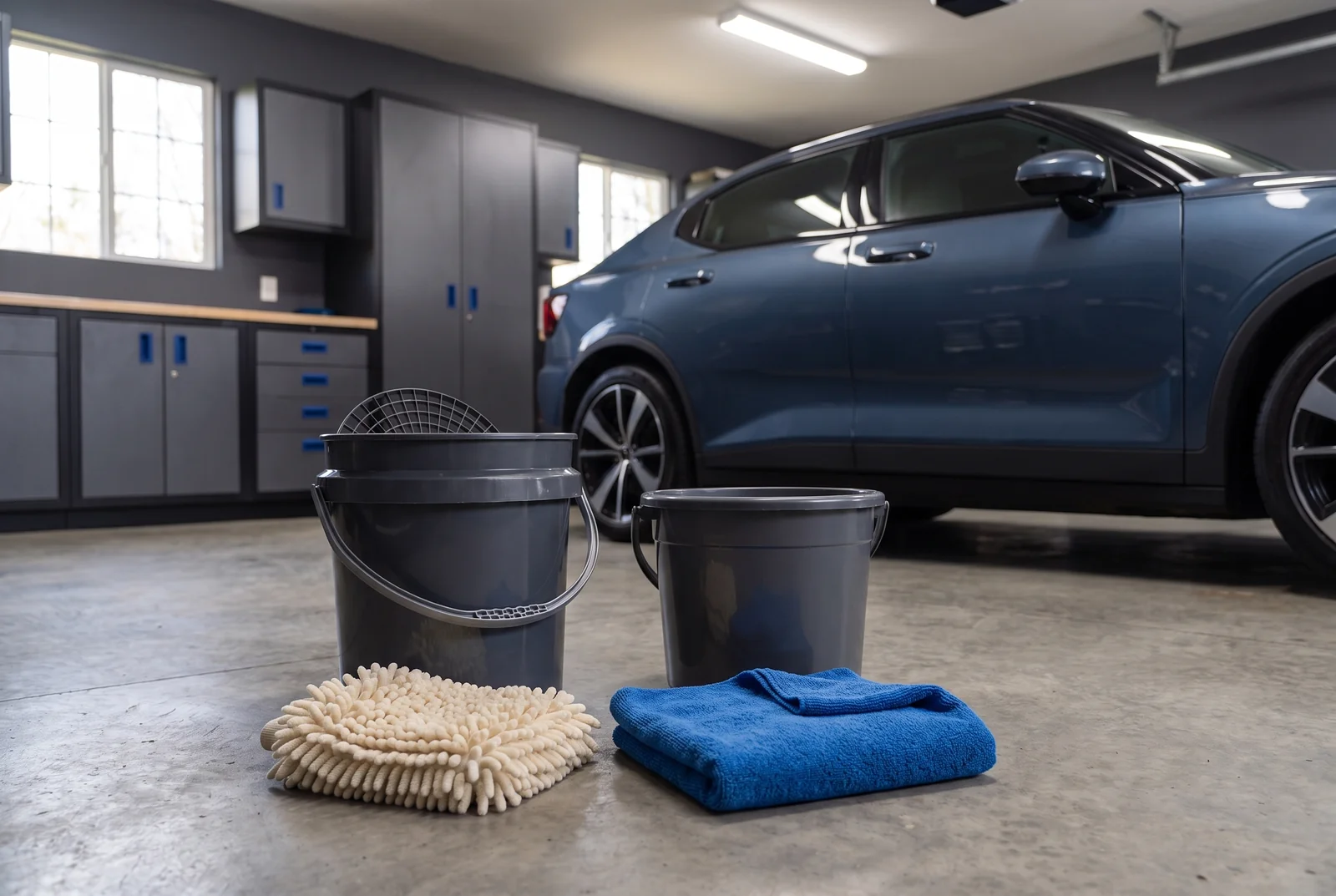
Identify any wrap, matte finish, paint-protection film or recent repair before choosing products. Find shade and a surface that is cool enough for the product’s instructions. Arrange clean wash media, a dedicated wheel kit, water and drying towels so you are not hunting for them halfway through.
Work from dirt assessment to contact
Inspect the level of contamination and follow the chosen shampoo’s directions. Loosen and rinse away removable dirt before dragging a mitt over it. Keep heavily contaminated wheel tools away from painted panels. Refresh or replace a wash medium when it carries visible grit rather than hoping another pass will clean it.
Control the size of the job
Work in manageable sections and do not let cleaning solution dry on the car. More concentrate is not automatically more effective. Use the labelled bucket or foam-equipment instructions for the method you selected; those can be different ratios. Our calculator translates a known ratio into quantities.
Leave time for the finish
Rinse as directed, inspect for remaining soil and use a clean, suitable drying towel. Do not treat a wash as an obligation to polish or add protection every time. Note a problem for a separate, surface-specific session instead of introducing a stronger chemical at the end of a rushed wash.
Make the choice useful
Build the kit around the sequence you can actually complete in your available space. A pressure washer or foam attachment is not required to understand the routine, and buying one does not fix contaminated towels or rushed drying. Check local washing and drainage requirements for the location. Make sure your chosen method fits the water access, weather and finish rather than copying equipment from a different setup.
Before the next session
No. Washing and polishing serve different purposes. Do not add a corrective process automatically at the end of a wash. Inspect the clean finish and decide separately whether any problem needs specialist assessment or a surface-compatible treatment.
ILLUSTRATIVE EXAMPLE
A practical example
For an ordinary maintenance session, lay out the wash product, separate wheel equipment and clean drying towels before adding water. If you discover an unknown surface treatment or a damaged area, pause that part of the job. A shorter session on identified surfaces is more useful than improvising a stronger treatment.
Your next steps
- Identify the finish: check surface instructions
- Prepare clean tools: separate paint and wheels
- Finish the routine: rinse and dry as directed
Questions that come up
Can I use dish soap as my normal car shampoo?
Choose a product labelled for the vehicle’s finish and any protection on it. A household detergent is not a substitute for verifying compatibility.
Is more foam proof of better cleaning?
Foam appearance alone does not establish cleaning performance or safe dilution.
Should I polish the car after every wash?
No. Washing and polishing serve different purposes. Do not add a corrective process automatically at the end of a wash. Inspect the clean finish and decide separately whether any problem needs specialist assessment or a surface-compatible treatment.
Sources and further reading
Source references for this edition, September 8, 2026. Recheck changeable rules and the exact product or vehicle instructions before acting.