
Choose towels by the surface and task, then consider construction, size, edges and care requirements. GSM describes mass per area; it is not a complete measure of softness, absorbency or suitability for every finish.
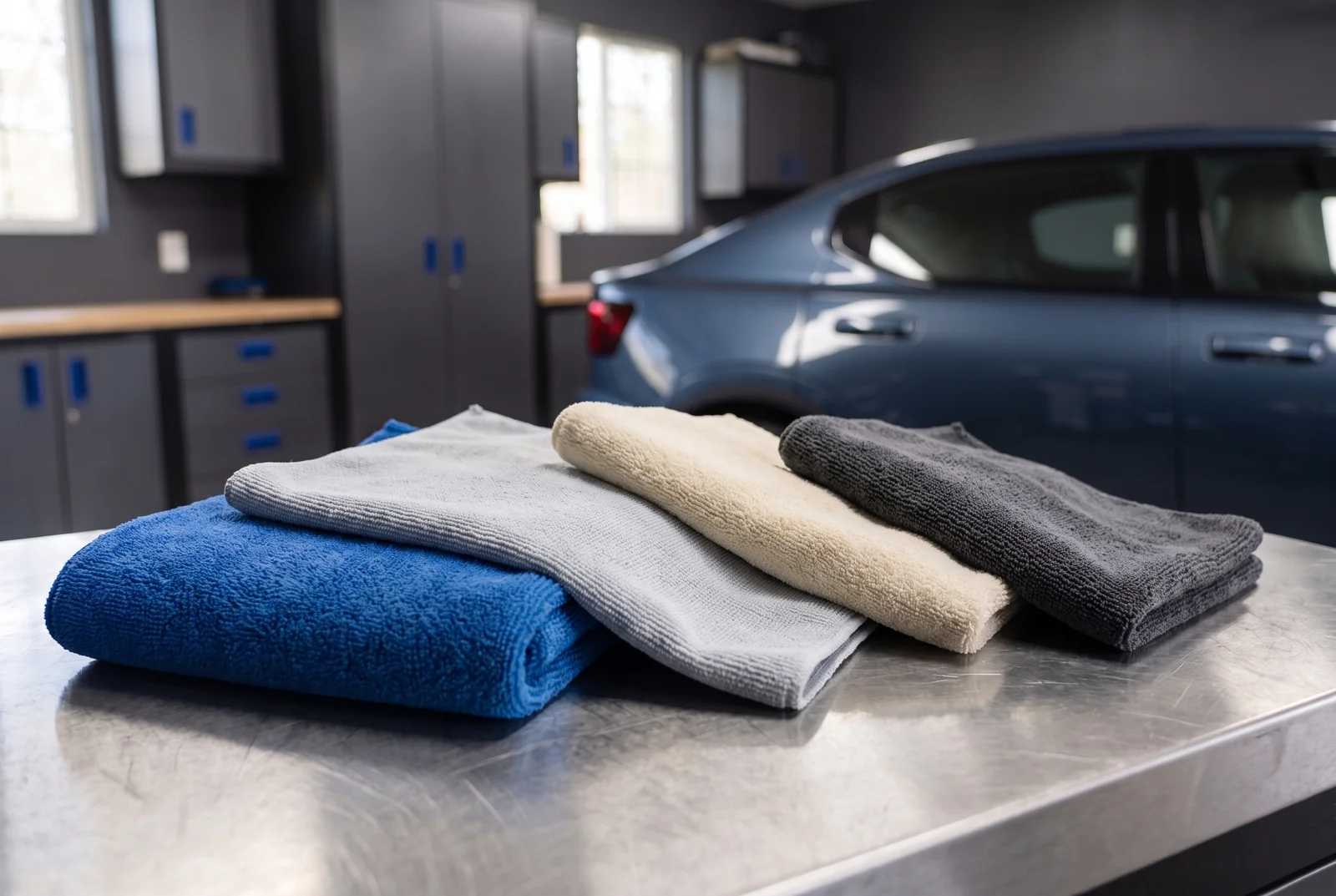
Choose by the job
| Decision | Why it matters | What to check |
|---|---|---|
| Task | Drying differs from glass or residue removal | Start with the supplier’s intended use |
| Construction | Pile and weave affect handling | Compare the actual towel type |
| Size | Large is not always easier to control | Match the panel and working space |
| Care and replacement | Affects the useful life of the kit | Check laundering and inspection needs |
GSM is one specification
Grams per square metre describes fabric mass per area. It does not, by itself, rank every towel for every task. Weave, size, edge construction and the intended use all deserve attention. A very plush towel is not automatically the best choice for a final glass wipe.
Give each towel a clear role
A starting kit can separate drying, glass finishing, interior cleaning and utility work. Choose sizes you can handle without dragging them over the floor. If a towel becomes saturated or dirty, have a clean replacement available rather than using the same face for the whole car.
Inspect before touching the finish
Check new towels under the manufacturer’s preparation guidance. During use, change to a clean face and stop using a towel that has picked up grit. The choice of towel cannot compensate for rubbing contamination across the paint.
Include laundry in the purchase
Buy a quantity you can keep clean between jobs. Separate storage and a consistent care method matter as much as a matching colour scheme. Keep a simple record of which cloths are reserved for the most delicate surfaces; retire worn ones from those tasks as their condition changes.
Make the choice useful
Begin with a small set that covers distinct jobs and add only where you run out of clean, suitable media. Check the edges, backing and any labels before use. Supplier descriptions are a starting reference, not an independent test of the towel on your particular finish. Keep an easy way to identify towels by task so a technically suitable towel does not become unsuitable through contamination.
Before the next session
No. Drying performance also depends on the towel’s construction, size, condition and intended use. Compare suitable towels for the same task and follow their care instructions. GSM alone does not justify a performance ranking.
ILLUSTRATIVE EXAMPLE
A practical example
A large drying towel can be convenient on broad panels but awkward for small interior details. A separate glass towel may reduce residue transfer. These are task-based choices; they do not require declaring one GSM figure the winner for the entire car.
Your next steps
- Choose the task: drying, glass or detail work
- Inspect construction: consider handling and edges
- Plan care: separate, wash and replace
Questions that come up
Is the highest-GSM towel always best?
No. Match construction and size to the specific task rather than using GSM as a universal quality score.
How many drying towels do I need?
Enough clean, suitable towels to finish without using a saturated or contaminated one. Vehicle size and towel design change that number.
Is a higher GSM towel always better for drying?
No. Drying performance also depends on the towel’s construction, size, condition and intended use. Compare suitable towels for the same task and follow their care instructions. GSM alone does not justify a performance ranking.
Sources and further reading
Source references for this edition, September 8, 2026. Recheck changeable rules and the exact product or vehicle instructions before acting.