
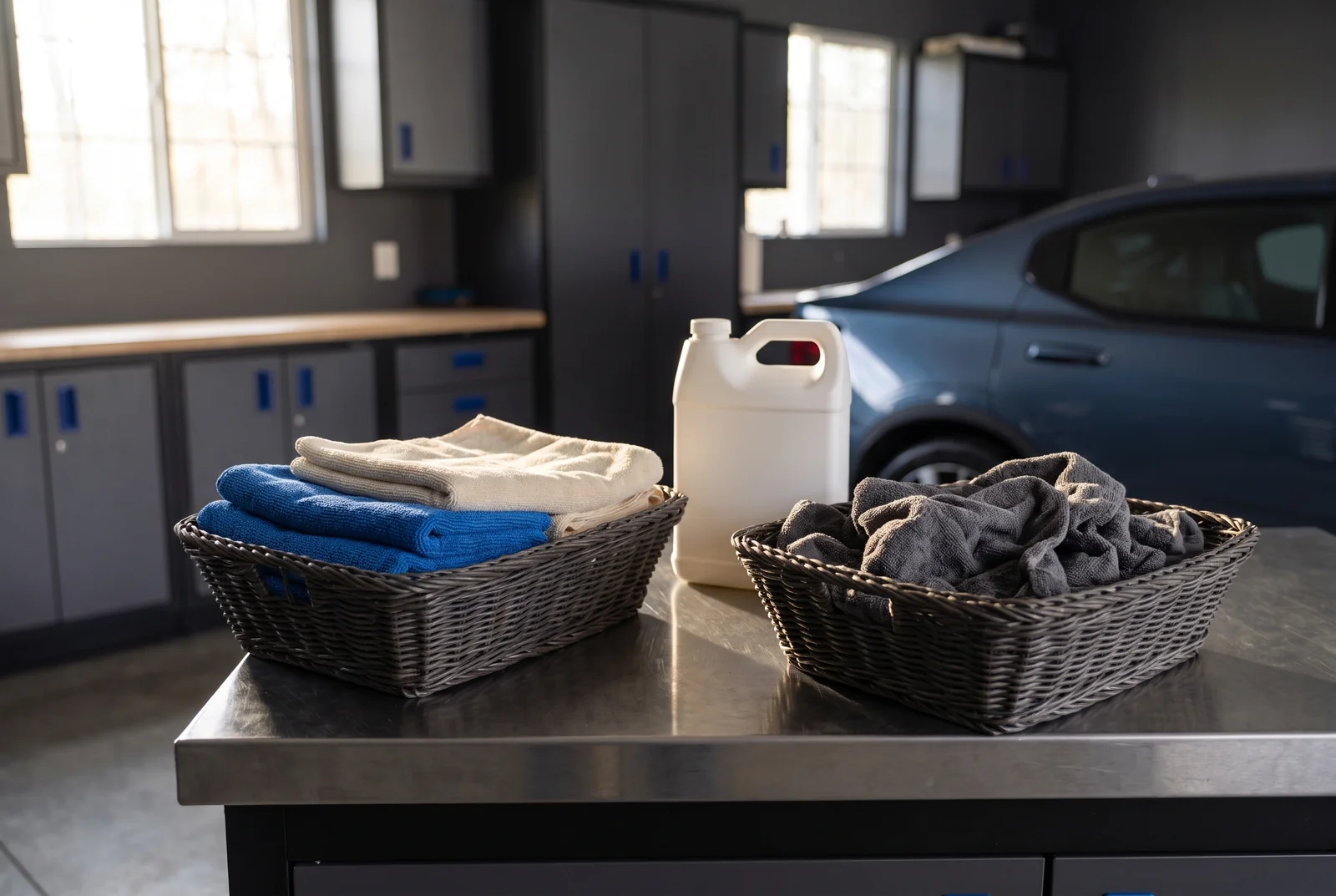
Sort towels by task and contamination, then follow their care instructions. Remove or retire media containing embedded grit, use suitable laundering products and store the towels clean and dry. Washing together should not transfer wheel dirt into your paint-care supply.
Choose by the job
| Decision | Why it matters | What to check |
|---|---|---|
| Previous task | Different residues need separating | Sort paint, glass and heavily soiled towels |
| Embedded grit | May remain despite a wash | Inspect and retire from delicate work |
| Laundry instructions | Heat and detergents vary by towel | Follow the actual supplier’s guidance |
| Storage | Clean fabric can collect new dirt | Keep dry towels in a clean container |
Separate the jobs before the laundry
Sort towels used on paint, glass, interiors and heavily contaminated areas. Remove towels with embedded debris from delicate work. A stained towel is not necessarily damaged, but a clean-looking towel can still contain particles that mark a surface.
Read the towel and chemical instructions
The Rag Company advises avoiding fabric softener, chlorine bleach and high heat for its microfiber, and keeping it away from lint-shedding materials. Follow the instructions for your exact towel. Towels carrying particular coatings or chemical residues may need separate handling under that product’s directions.
Inspect after drying
Check the fibres, edges and any sewn areas before returning a towel to the paint kit. If it feels stiff or contains particles, investigate rather than assuming another quick wipe will be safe. Keep towels dropped on the ground out of the active wash until they have been properly cleaned and inspected.
Store by use, not by appearance
Label containers for glass, drying, interior and dirty utility work. Let towels dry fully before enclosing them. A practical storage system reduces the chance of grabbing a wheel towel for a painted panel. Log worn towels for retirement from delicate tasks instead of treating every cloth as interchangeable.
Make the choice useful
Buy enough towels to keep the jobs separate and complete a session with clean media. A large towel bundle is useful only if you can identify, wash and store the different groups. Follow the towel supplier’s guidance on detergent, additives and drying; avoid transferring a care rule from an unrelated fabric. Inspect the edges and surface when dry before returning a towel to delicate work.
Before the next session
Keep heavily contaminated wheel work separate from paint and glass. Reusing one towel across all those tasks can transfer dirt and product residue. Plan a small, identifiable set of clean towels rather than relying on a single cloth throughout the job.
ILLUSTRATIVE EXAMPLE
A practical example
A towel dropped onto gritty ground should not go straight back onto paint after a quick shake. Set it aside, inspect it and decide whether it can be safely recovered for a suitable task. The cost of replacing a towel belongs in the care budget, not in a reason to keep using contaminated media.

Your next steps
- Sort by task: keep contamination separate
- Wash by instructions: use compatible settings
- Inspect and store: keep clean towels protected
Questions that come up
Can microfiber go in a washing machine?
Many automotive microfiber towels can; follow the exact care label and separate unsuitable contamination.
Can I use fabric softener?
For the microfiber instructions cited here, no. It can interfere with the towel’s intended performance.
Can one towel do wheels, paint and glass in the same wash?
Keep heavily contaminated wheel work separate from paint and glass. Reusing one towel across all those tasks can transfer dirt and product residue. Plan a small, identifiable set of clean towels rather than relying on a single cloth throughout the job.
Sources and further reading
Source references for this edition, September 8, 2026. Recheck changeable rules and the exact product or vehicle instructions before acting.