
Choose the cleaner by the wheel’s finish and condition. Alloy describes the underlying material, but painted, polished, coated and damaged surfaces can require different care. Use separate wheel equipment and follow the stated working conditions and dwell time.
Choose by the job
| Decision | Why it matters | What to check |
|---|---|---|
| Finish | Determines compatibility | Identify the coating and any exposed areas |
| Temperature | Affects application conditions | Work within the label’s guidance |
| Brush access | Shape and clearance vary | Avoid forcing a tool into gaps |
| Runoff and transfer | Wheel contamination should stay separate | Keep wheel and paint media apart |
The exposed finish matters
An alloy wheel may be painted, clear-coated, polished or finished in another way. “Alloy” describes the underlying material broadly; it does not tell you which chemical is safe on its surface. Look up the wheel and vehicle care information first, including any aftermarket coating.
Give the wheels a separate kit
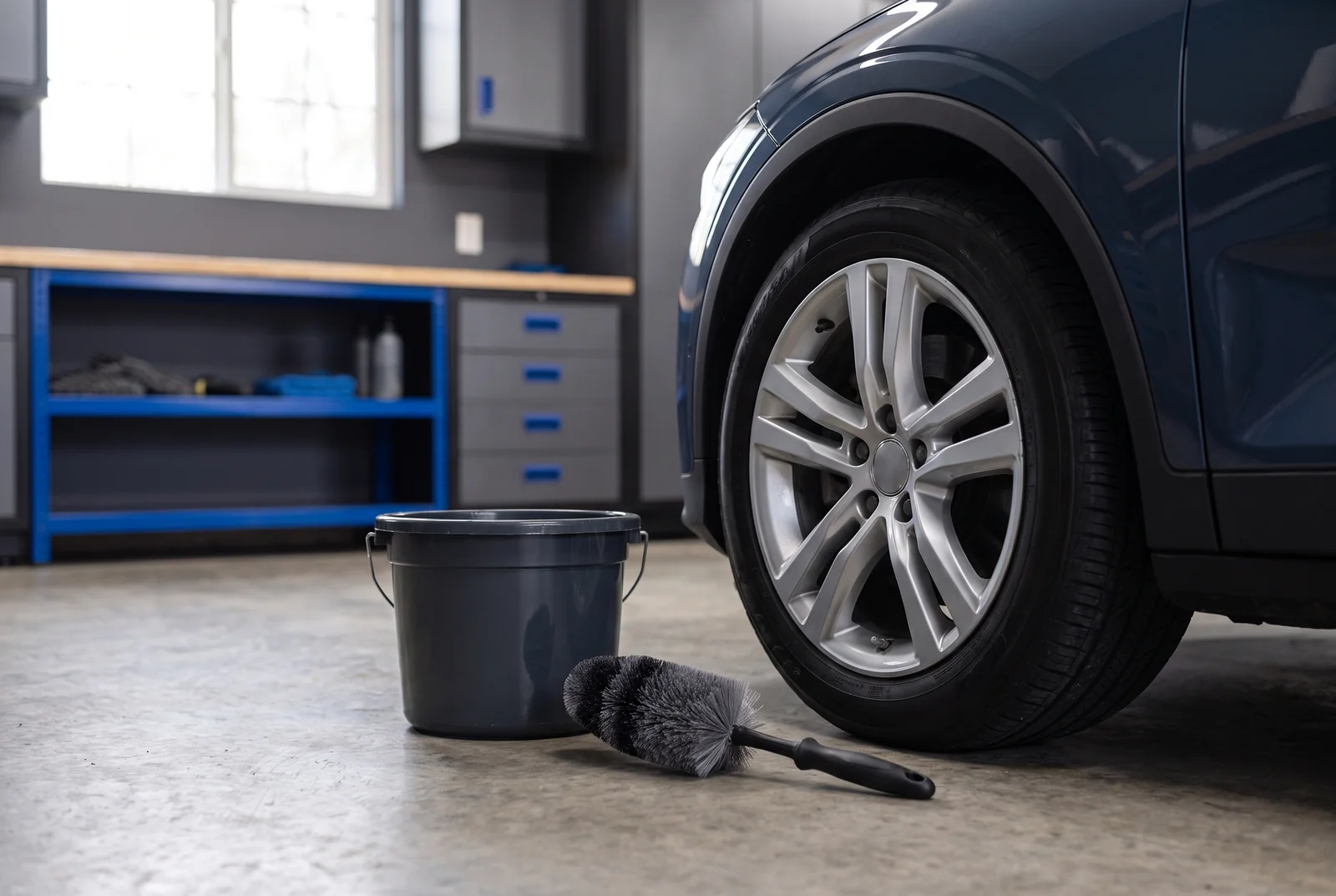
Wheel dirt should not travel to paintwork on the same mitt or towel. Set out dedicated tools and use them only for the intended areas. Check brushes for trapped grit and for edges that could mark the finish. Reach matters, but do not force a tool around components you cannot see.
Control temperature and dwell time
Work under the conditions allowed by the cleaner and wheel maker. Avoid applying products to hot surfaces or letting them dry if the directions prohibit it. Follow the label for dilution and rinsing. A colour change from a cleaner is not permission to extend its dwell indefinitely.
Stay inside the cleaning task
This guide covers cosmetic cleaning, not wheel removal, brake service or tyre decisions. Damaged coating, corrosion and mechanical concerns need the appropriate specialist. Photograph any new damage and clarify the finish before experimenting with a stronger cleaner.
Make the choice useful
Compare the kit by access and control. A long brush can help in one barrel shape and be awkward in another; soft media still need to be clean and appropriate. Plan rinsing and drying before applying the cleaner, and avoid letting the solution dry beyond its directions. If a finish is flaking or corrosion is visible, cleaning is not a repair for the underlying damage.
Before the next session
No single label phrase establishes universal compatibility. Read the full list of approved surfaces, exclusions and use conditions. The finish, its condition and any manufacturer-specific care requirements still matter.
ILLUSTRATIVE EXAMPLE
A practical example
A product suitable for one painted wheel may not be suitable for an exposed polished surface or damaged coating. Check a replacement wheel separately from the vehicle’s original specification. The appearance of metallic colour alone does not settle what finish you are cleaning.
Your next steps
- Identify the finish: inspect its condition
- Choose compatible tools: keep them separate
- Follow the timing: rinse and dry as directed
Questions that come up
Is any wheel cleaner safe for every alloy wheel?
No. Check the specific finish and the cleaner’s compatibility list.
Can wheel brushes also be used on paint?
Keep the wheel kit separate to avoid transferring abrasive contamination.
Is an acid-free wheel cleaner safe for every wheel?
No single label phrase establishes universal compatibility. Read the full list of approved surfaces, exclusions and use conditions. The finish, its condition and any manufacturer-specific care requirements still matter.
Sources and further reading
Source references for this edition, September 8, 2026. Recheck changeable rules and the exact product or vehicle instructions before acting.