
Start with ordinary compatible glass cleaning and identify any coating or film. Persistent deposits need a treatment approved for that exact surface. Do not assume that an acid, abrasive or household mixture is suitable because the base material is glass.
Choose by the job
| Decision | Why it matters | What to check |
|---|---|---|
| Inside or outside | Different contamination and treatments may apply | Identify the affected side |
| Coating or tint | Can change product compatibility | Check installer and vehicle guidance |
| Ordinary residue | May respond to a normal cleaning routine | Start with the approved mild method |
| Persistent marking | May need diagnosis or specialist treatment | Avoid escalating chemistry by guesswork |
Find which side needs attention
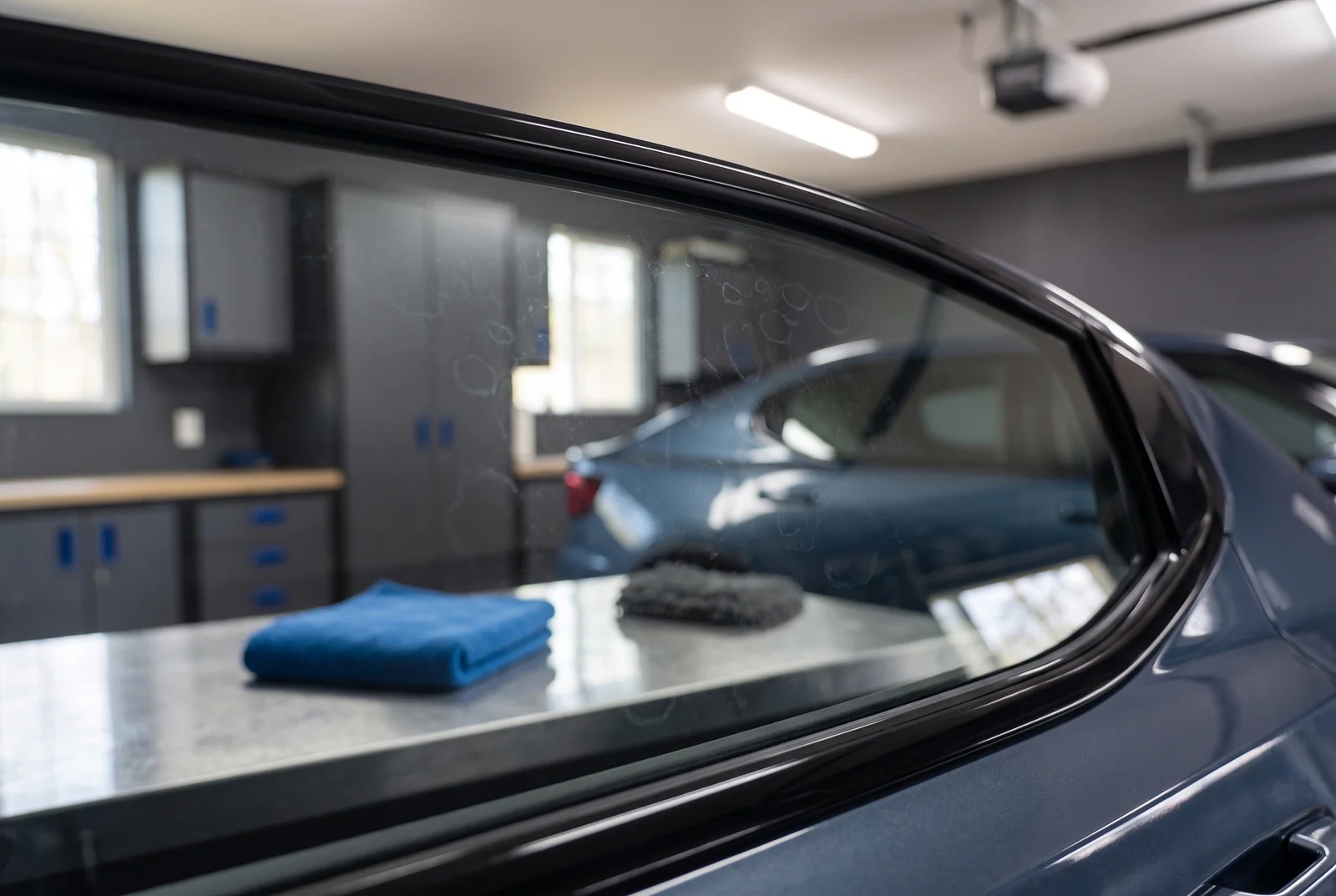
Clean a small area using the vehicle’s permitted glass-cleaning method, then inspect both sides in good light. Interior haze and dried exterior deposits can look similar through the window. A tint film, applied coating or embedded feature can change what is safe to use.
Start with the ordinary compatible clean
Use a dedicated clean cloth and a glass product approved for the relevant surface. Change the wiping face as it collects residue. Do not transfer a towel used for wax or interior dressing onto the glass; that can add a fresh film while you are trying to remove one.
Do not jump straight to an abrasive
A household eraser, blade or polish can damage a surface or coating. If marks remain, consult the glass/coating maker’s guidance and the exact remover’s instructions. Determine whether the problem is removable deposit or permanent surface damage before repeating a treatment.
Make prevention part of drying
After washing, give glass its own clean finishing towels and inspect it before driving. Adjust lighting to see streaks. If visibility remains impaired, resolve the cause rather than masking it with another product. A consistent drying step is easier to maintain than a cycle of increasingly aggressive spot removal.
Make the choice useful
Choose clean cloths suitable for glass and keep them separate from product-heavy paint towels. A product’s permitted glass applications may not include screens, plastics or every aftermarket film. When a marking affects visibility or persists after the approved routine, use the relevant manufacturer or a professional to determine the next step. The goal is a clear surface, not the strongest chemical available.
Before the next session
Do not treat a household vinegar mixture as universally compatible with automotive glass assemblies, coatings, tint or surrounding trim. Use the care instructions for the actual surface and a product explicitly suitable for the application.
ILLUSTRATIVE EXAMPLE
A practical example
If a mark remains after a compatible cleaner has been used and the glass is dry, inspect it under useful lighting. Repeatedly adding more of the same cleaner without reassessing may only leave more residue. Record whether the mark is inside or outside and whether the glass has a treatment.
Your next steps
- Locate the mark: identify side and treatment
- Clean compatibly: use separate cloths
- Reassess dry: resolve persistent deposits
Questions that come up
Can I use the same towel for wax and windows?
Use dedicated clean glass towels to avoid carrying oily residues onto the window.
Are all water spots removable with cleaner?
No. Some marks may involve surface damage or a coating issue, which needs different assessment.
Can I use vinegar on every car window?
Do not treat a household vinegar mixture as universally compatible with automotive glass assemblies, coatings, tint or surrounding trim. Use the care instructions for the actual surface and a product explicitly suitable for the application.
Sources and further reading
Source references for this edition, September 8, 2026. Recheck changeable rules and the exact product or vehicle instructions before acting.