
The journal
How long are tires good after the manufacturing date? Practical limits and checks
There isn’t a single expiration period that fits every tire. Read the DOT date code, follow your tire and vehicle maker’s guidance, inspect condition, and replace sooner if there’s damage or performance changes.
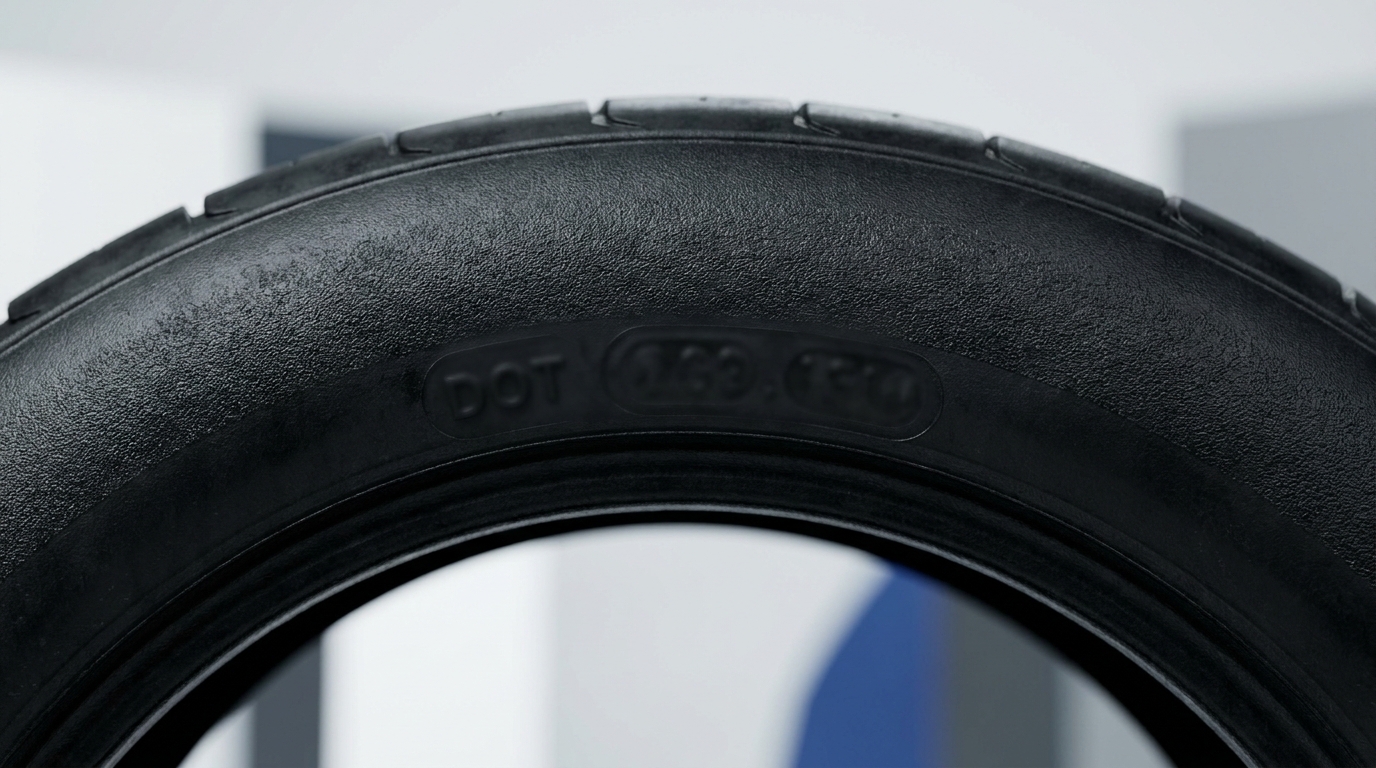
There is no single “good until” age for all tires after the manufacturing date. Tire age by itself cannot establish whether a tire is safe. Follow the tire maker’s and vehicle maker’s guidance plus the tire’s condition. Michelin advises a professional inspection at least annually once a tire has been in service five years, and replacement ten years from its date of manufacture, even if tread remains Michelin: When to replace tires. Replace sooner if your automaker specifies an earlier interval, or if wear or damage appears.
When storage or service history is uncertain, the Extension Foundation recommends treating six years from the manufacture date as a conservative replacement limit Extension Foundation: Tire safety.
How to read the DOT date code and avoid common mistakes
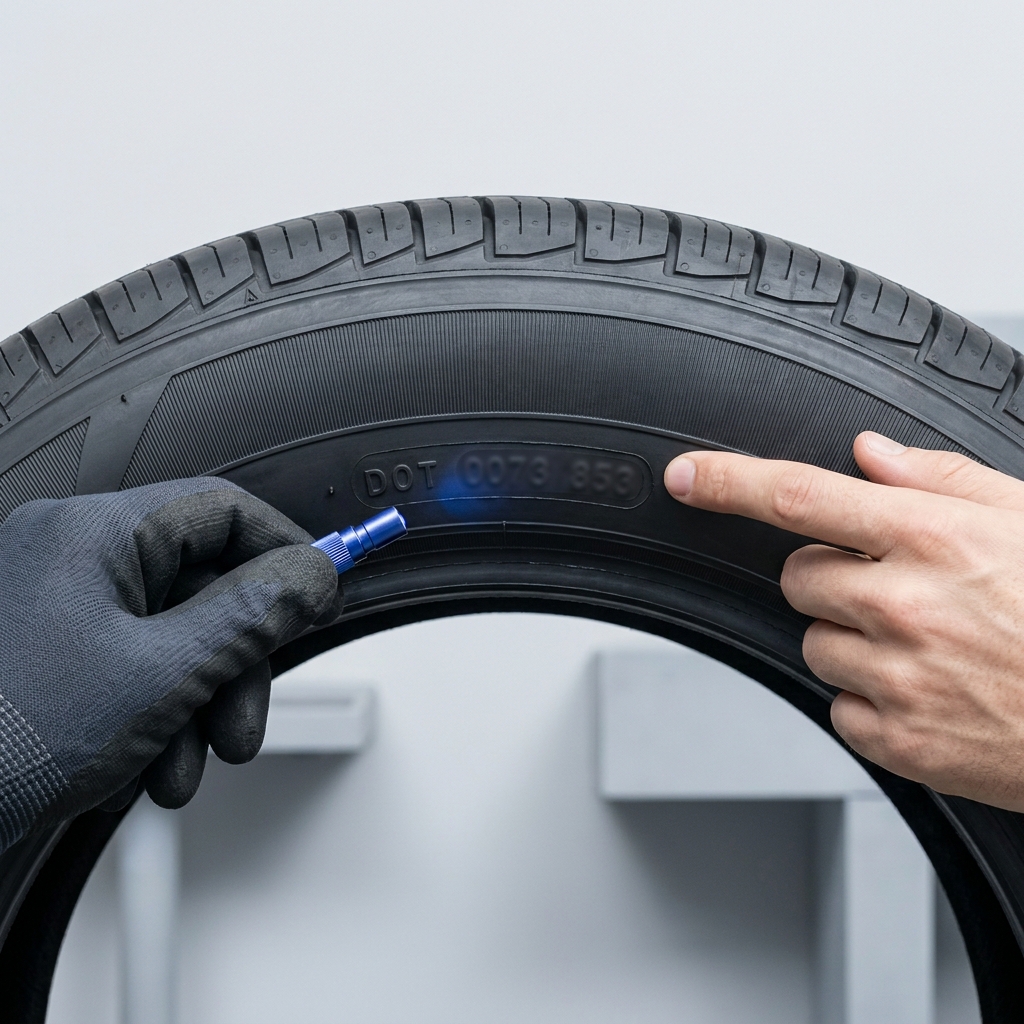
Find the DOT code molded into the tire sidewall. The final four digits indicate the week and year of manufacture: for example, 3520 means the 35th week of 2020 Michelin: When to replace tires.
- Post-1999 tires: last four digits are WWYY (week, year).
- Pre-2000 tires: a three-digit code was used; these should be removed from service due to age alone Mastercraft: Tire date code.
Important: manufacturing date and time in service are different. Michelin’s five-year inspection guidance is based on time in service, while the ten-year replacement is counted from the manufacturing date Michelin: When to replace tires.
Which age limit should you follow?
Follow the tire maker first
Use the brand’s stated policy. Michelin recommends annual inspections after five years in service and replacement at ten years from manufacture for any tire, including the spare Michelin: When to replace tires.
Respect your vehicle maker’s requirements
For original-equipment tires, Michelin explicitly says to follow the vehicle manufacturer’s tire replacement recommendations. If they are earlier, do not exceed them Michelin: When to replace tires.
Use a conservative rule when history is unknown
If you cannot verify storage or service conditions, the Extension Foundation urges replacing tires at six years from the manufacture date as a precaution Extension Foundation: Tire safety.
Condition beats calendar: signs that require replacement now
Age alone does not determine serviceability; evaluate condition and performance too Michelin: When to replace tires. Replace or have a tire professionally inspected immediately if you notice:
- Sidewall bulges, blisters, deep cuts, or cracking Michelin: When to replace tires.
- Persistent vibration, pulling, or handling changes that don’t resolve after balancing or alignment checks Michelin: When to replace tires.
- Tread worn to the built-in wear bars at 2/32 inch (1.6 mm) Michelin: When to replace tires.
What accelerates tire aging?
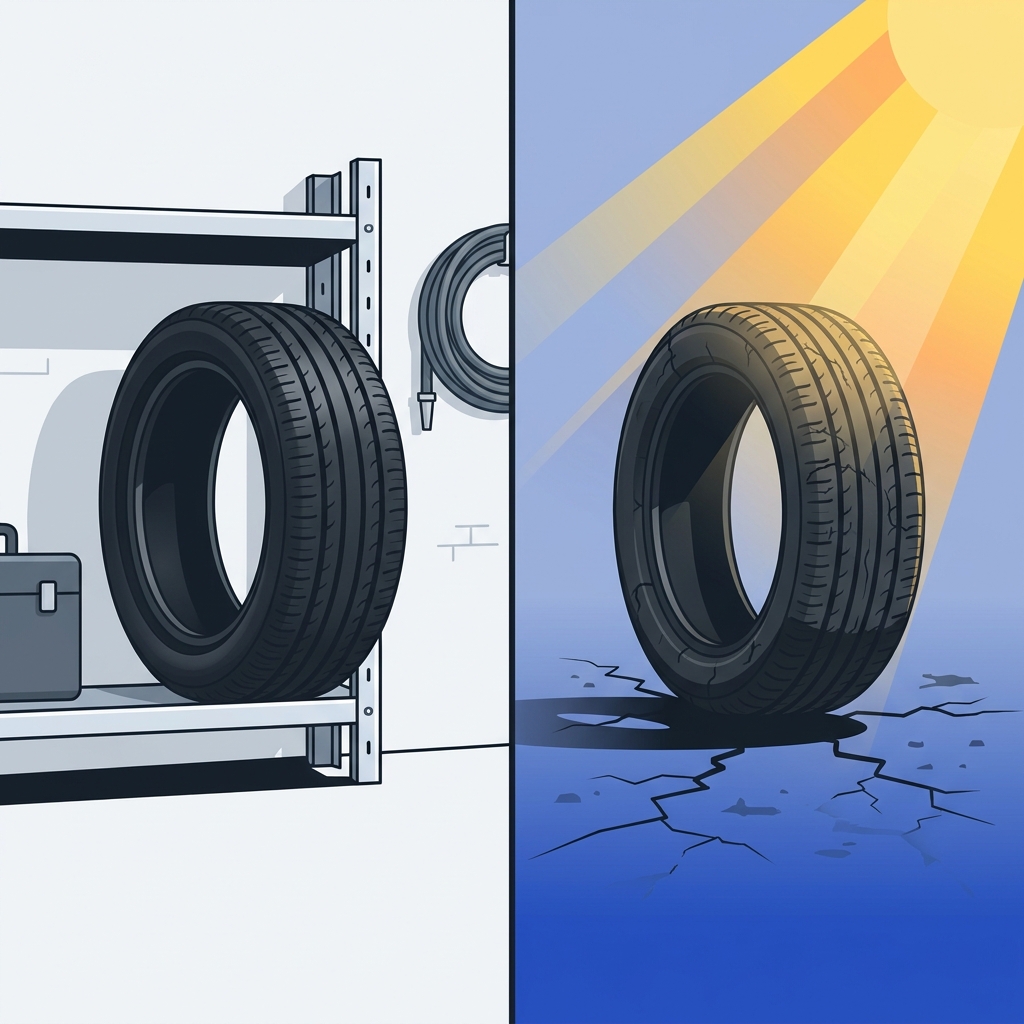
Rubber materials degrade over time from heat cycles, UV exposure and ozone, which can reduce durability and performance even if tread remains Michelin: When to replace tires. That’s why storage quality and the tire’s real-world service matter as much as the calendar.
Before using older or stored tires: a practical sequence
- Read the DOT code on each tire and note the WWYY date. Confirm whether any tire is at or beyond your selected age limit Mastercraft: Tire date code.
- Check service and storage history. If unknown or poor (heat, sun, ozone), use a more conservative age limit and arrange an inspection Extension Foundation: Tire safety.
- Inspect condition: look for cracking, bulges, deep cuts, exposed cords, or irregular wear; replace immediately on any such sign Michelin: When to replace tires.
- Evaluate performance on a short, cautious drive: vibration or pulling warrants professional inspection before regular use Michelin: When to replace tires.
Quick checks before trusting an older tire
Common mistakes to avoid
- Judging only by tread depth. Rubber can age and lose performance before the tread is worn out. If you’re focused on tread, see our guide: Should tires with 5/32 tread be replaced?
- Assuming “recently manufactured” guarantees safety. Storage, use, and damage matter. Follow inspections and the maker’s limits.
- Skipping pressure checks on older tires. Underinflation adds heat and accelerates aging; learn the basics in How to check car tire pressure.
Short FAQ
Does a tire become unsafe exactly six or ten years after manufacture?
No. Those are recommendations, not guarantees of safety. Michelin sets a ten-year maximum from manufacture and urges annual inspections after five years in service; replace sooner for wear, damage, performance changes, or if your automaker sets an earlier interval Michelin: When to replace tires. The Extension Foundation advises a six-year conservative limit when history is uncertain Extension Foundation: Tire safety.
Do spares follow the same age rules?
Yes. Michelin’s ten-year maximum from manufacture includes spare tires, even if never used Michelin: When to replace tires.
Where exactly is the date on the tire?
Look for the DOT code on the sidewall; the last four digits are the week and year of manufacture. Pre‑2000 tires used a three‑digit code Mastercraft: Tire date code.
