
The journal
Should the silver side of a car sunshade be in or out? Practical guide to fit and orientation
Learn how to choose car sunshade size and why the silver side usually faces out to lower cabin heat, plus measurement steps and safety reminders.
Short answer and why orientation matters
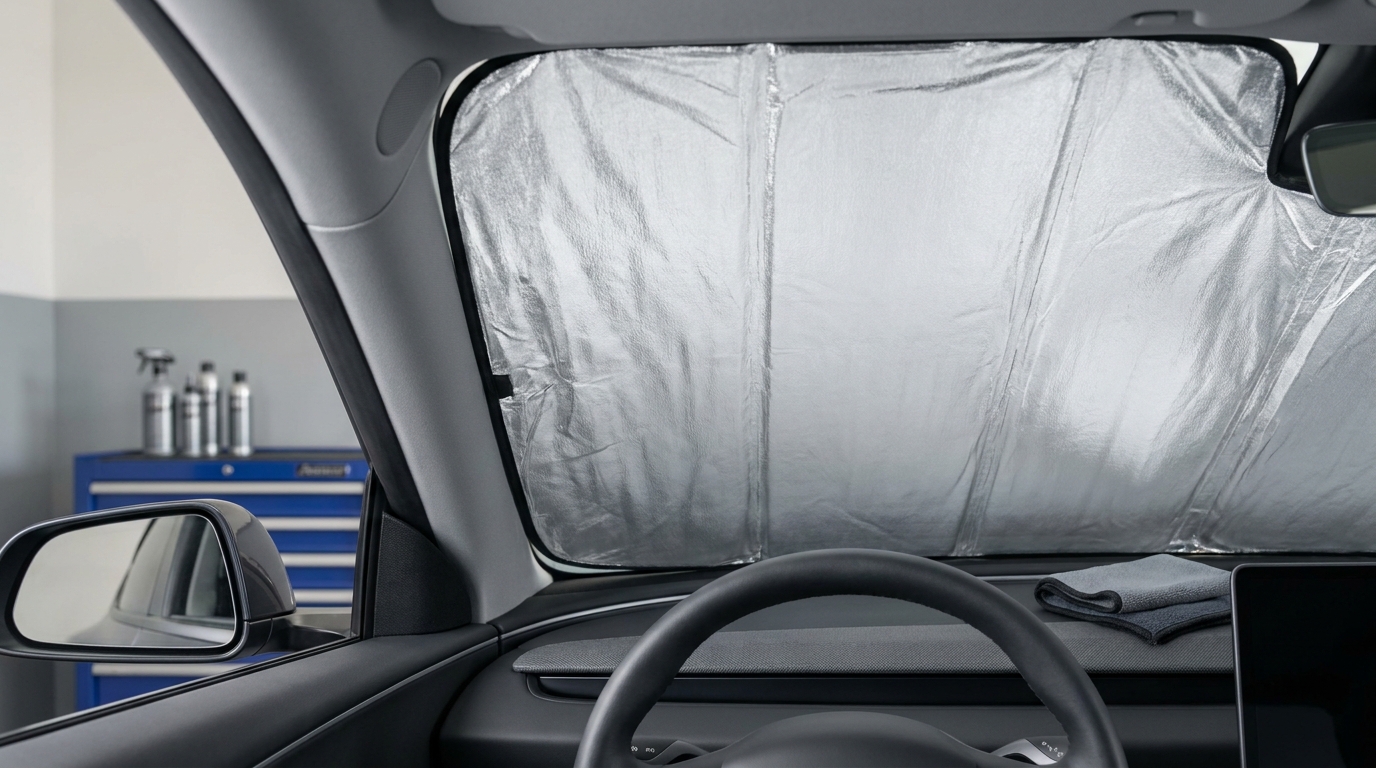
Quick answer: for reducing solar heat, position the reflective silver side of the sunshade facing outward, toward the sun, so it reflects incoming radiant energy before it can warm the dashboard and seats. This follows the same radiant-barrier principle used in building energy guidance and is the simplest way to lower cabin and surface temperatures when a vehicle is parked.
Should the silver side of a car sunshade face inward or outward to reduce cabin heat?
To reduce solar heat, the silver, reflective side should face outward toward the sun because it reflects radiant energy before it is absorbed by interior surfaces; reversing the shade is only sometimes helpful in winter to retain modest interior warmth.
Why it changes cabin temperature: a sunshade with a low-emissivity, high-reflectance surface placed behind the windshield creates a reflective face that sends much of the sun's radiant energy back toward the glass and sky instead of letting it be absorbed by interior materials. That reflection reduces the amount of heat that has to move into the cabin through radiation and then conduction, so dashboard surfaces and the visible interior stay noticeably cooler when the shade is correctly oriented Lawrence Berkeley National Laboratory – Windows & Daylighting.
How reflective sunshades work: the basic physics and what tests show
Reflective principle in plain language: materials with low emissivity and high reflectance act like a mirror for thermal radiation. In practice, a silver-coated or foil-faced sunshade reduces the radiative heat flux that reaches the dashboard and other interior surfaces by reflecting much of the incoming solar energy back out through the glass rather than letting it be absorbed and then reradiated inside the cabin.
The role of an air gap: radiant barriers are most effective when the reflective surface faces an air space between the heat source and the protected surface. When a sunshade sits directly behind the windshield, that condition is met because there is a narrow air cavity between the glass and the interior surfaces, and the reflective face can intercept radiation before it heats the dash and trim Lawrence Berkeley National Laboratory – Windows & Daylighting.
What engineering and consumer tests measured: automotive engineering work and consumer evaluations consistently find that a properly used windshield sunshade reduces interior and surface temperatures compared with no shade, improving comfort and lowering material exposure to direct sun. Laboratory papers and field tests show temperature drops at dashboards and in-cabin air when reflective shades are present, though the magnitude varies with shade material, fit and ambient conditions SAE technical paper and Popular Mechanics.

Limitations to expect: while shades lower solar load they do not stop a parked vehicle from becoming dangerously hot if people or pets are left inside. Consumer testing confirms shades help comfort and reduce surface temperatures, but they are not a safety device for occupied vehicles, and users should follow government safety warnings about never leaving vulnerable occupants unattended in cars.
How to choose car sunshade size: step-by-step measurement and fit rules
Measure your windshield: what to measure and how
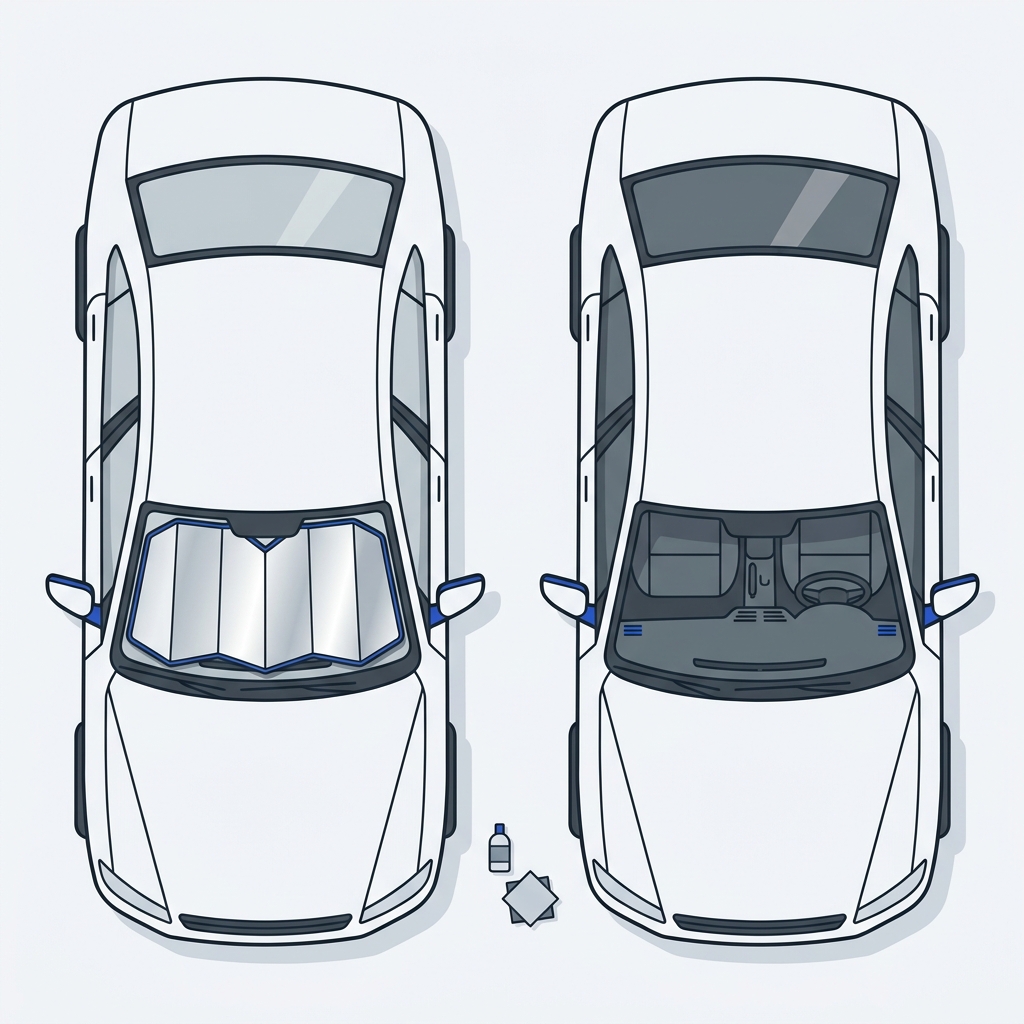
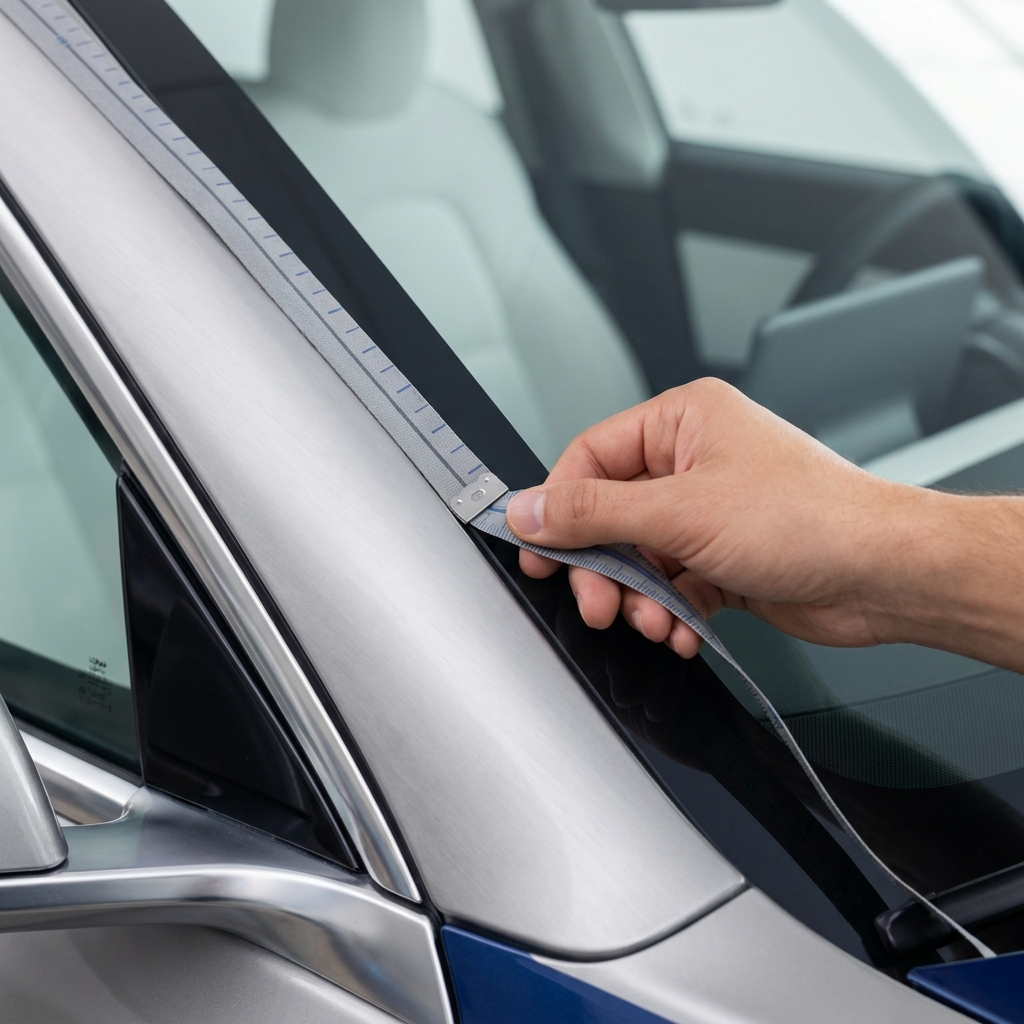
Step 1, gather a tape measure or flexible ruler and a notepad. Measure the visible glass width at the level of the dashboard where you intend the shade to sit. For most cars this is the horizontal distance between the inside edges of the A-pillars, measured where the glass meets the interior trim. Record that width to the nearest 1/4 inch.
Step 2, measure the visible glass height from the top edge of the dash area to the lowest point of the windshield near the rearview mirror mount or where the glass meets the headliner. For curved windshields, measure at the center and again near the corners and use the smallest clear opening as your guide to avoid a shade that is too tall.
Step 3, check windshield curvature. If your windshield sweeps sharply or has a deep curvature, a flat folding shade sized to the maximum visible rectangle may leave gaps at the corners; in those cases, consider a pop-up or custom-moulded shade designed to follow the glass contour and improve edge coverage.
Fit and coverage guidelines: gap tolerance and edge coverage
Prioritise coverage over a perfect finish. The goal is to block direct sightlines between the sun and the dashboard, center console and front-seat surfaces. Small edge gaps of under about one inch around the perimeter are usually acceptable; larger uncovered zones along the lower glass or around the corners let direct radiation strike hot spots and reduce effectiveness SAE technical paper.
When comparing product specs, check the packaging or product page dimensions against your measured width and height. Keep in mind that many universal shades list maximum folded or extended dimensions that do not reflect the effective coverage when placed behind the windshield, so real-world fit comments in reviews are useful for understanding typical gaps and adjustments.
Types and size differences: universal, folding, custom-fit
Folding panels are compact and easy to store but often come in standard sizes, so they may leave more edge gap on larger windshields. Pop-up shades fit some shapes better and are fast to deploy, while custom-moulded or vehicle-specific shades are made to match a model's glass and usually give the best full-width coverage when accurately matched to your measurements.
Choose the format that lets you maximise dashboard coverage without interfering with mirror mounts, sensors or wipers. For many drivers a custom-fit or purpose-shaped shade is worth the extra cost if your vehicle has an unusually tall or curved windshield.
Orientation choices and seasonal tips
Summer: why silver side out is best
Summer rule: point the silver, reflective side outward toward the sun to reflect incoming solar radiation before it reaches the glass and interior surfaces. This orientation uses the low-emissivity face to bounce back a large portion of solar energy and reduces the heat load on the cabin.
Practical example: when the reflective side faces out there is less radiant energy left to be absorbed by the dashboard and trim, which leads to lower surface temperatures on those materials compared with the reverse orientation. That difference is the core reason automotive and building radiant-barrier guidance recommends the reflective face toward the heat source Lawrence Berkeley National Laboratory – Windows & Daylighting.
Summer caveat: a reflective shade helps substantially compared with no shade, but it does not prevent the vehicle from heating to dangerous temperatures if occupants are left inside, and it should not be treated as a safety device for children or pets National Highway Traffic Safety Administration (NHTSA).
Winter: when flipping inward makes sense
Winter nuance: if your aim is to retain some daytime warmth inside a parked vehicle, flipping the reflective face inward can reflect a portion of interior radiant heat back toward the cabin surfaces, reducing outward radiative loss through the glass. The effect is typically smaller than external covers because the glass and air gaps still exchange heat by conduction and convection Lawrence Berkeley National Laboratory – Windows & Daylighting.
Practical note: reversing the shade for winter can make the cabin marginally warmer when sunlight is low and the vehicle is otherwise unheated, but for serious cold retention you will need purpose-built external covers or garage parking; a reversed interior shade is a modest help at best.
How tinted or solar glass affects the recommendation
Tinted or solar-reflective glass reduces the total solar load entering the cabin, but it does not remove the benefit of a reflective shade; a shade with the silver side outward still intercepts and reflects radiation before it reaches the dashboard, so orientation guidance remains the same even on vehicles with treated glazing U.S. Department of Energy – Energy Saver.
Summary decision rule: for summer choose silver side out, for winter consider silver side in only if your priority is retaining some heat while parked; always weigh the small performance trade-off against the specific shape and fit of your chosen shade.
Common mistakes, troubleshooting and safety reminders
Fit and placement errors that reduce effectiveness
Common error: using a shade that is too small leaving large exposed areas along the lower windshield or corners. Large uncovered zones allow direct solar rays to strike the dashboard and create hotspots that reduce overall effectiveness SAE technical paper.
Quick fix: keep a small roll of foam or cardboard blocks in the glove compartment to fill edge gaps where a universal shade fails to sit flush; for persistent issues, choose a different format or a custom-fit option designed for your model.
Misunderstanding orientation and seasonal misuse
Mistake to avoid: placing the reflective side inward in summer. That orientation reflects less incoming solar energy and leaves the dashboard more exposed to radiation through the glass, decreasing the shade's capacity to reduce cabin heat in warm conditions.
Seasonal tip: store dual-purpose shades in a labelled bag so you can switch orientation seasonally without confusion; if you live where seasons are mixed, default to silver side outward most of the year unless you need winter retention occasionally.
Critical safety warnings and what not to do
Never assume a shade makes it safe to leave people or pets unattended in a vehicle. Government advisories are clear that interiors can reach dangerous temperatures quickly in any season, and sunshades are not a substitute for never leaving children or animals alone in a parked car National Highway Traffic Safety Administration (NHTSA).
If you find a vulnerable occupant in a parked vehicle, follow local emergency guidance immediately and do not rely on the presence of a sunshade as a safety measure. Keep water, shading and ventilation strategies for use before and after travel instead of relying on a parked-vehicle shade to provide protection.
Quick checklist and final recommendations
One-page checklist to choose size, orientation and fit: measure visible glass width and height, prioritise dashboard coverage, prefer silver side outward for summer and consider inward orientation only for limited winter retention, check fit on arrival and read reviews for real-world fit notes.
When a shade is not enough: if the cabin is already hot, ventilate by opening doors briefly and parking in shade or using active ventilation before re-entering; for prolonged parking, combine a reflective shade with shade from trees, awnings or external covers when possible to get the best reduction in solar load SAE technical paper.
Closing safety reminder: sunshades improve comfort and reduce surface temperatures but do not make a vehicle safe for unattended occupants. Always follow government safety advice and treat shades as part of a comfort and preservation strategy, not a safety solution National Weather Service (NOAA).
Appendix: quick sizing reference
Measure across the widest visible section of the windshield and the tallest continuous visible height, then choose a shade format that maximises dashboard coverage and minimises lower-glass gaps. If you want a quick rule of thumb, prioritise width over a marginally greater height because dashboard exposure is the primary source of uncomfortable surface heat.
Store your measurements in the glovebox or phone notes so you can check fit when you order a replacement or compare universal sizes; for vehicles with complex glass shapes, consider vehicle-specific or custom-moulded shades.
Frequently asked questions
Should the silver side of a sunshade always face out?
For summer cooling, yes: the reflective silver side should face outward to reflect solar radiation and reduce dashboard and cabin temperatures. In winter you can flip it inward to reflect some interior heat back, but the effect is limited.
How do I measure my windshield for a sunshade?
Measure the visible glass width between the A-pillars and the height from the dash top to the lowest visible glass point. For curved glass, measure center and corners and use the smallest clear opening.
Can a sunshade prevent heatstroke in a parked car?
No. Sunshades reduce cabin temperature and comfort but do not make a vehicle safe for children, pets or vulnerable people; follow government safety advice and never leave occupants unattended.
A properly fitted sunshade with the silver side facing outward is an inexpensive way to reduce cabin heat and protect interior surfaces. Use the measurement steps and checklist in this guide to pick a size that maximises dashboard coverage, and remember that shades help comfort but do not make a vehicle safe for unattended occupants. If your priority is safety, follow government advisories about never leaving children or pets in a parked car and combine shading with shade parking and ventilation when possible.
References
- https://doi.org/10.4271/2005-01-1880
- https://www.nhtsa.gov/road-safety/child-heatstroke
- https://www.popularmechanics.com/cars/a65636094/do-car-sun-shades-work/
- https://drivenandkept.com/car-accessories/choose-windshield-sunshade
- https://www.caranddriver.com/car-accessories/g65413903/best-car-sun-shades-tested/
- https://drivenandkept.com/articles/should-the-silver-side-of-a-car-sunshade-be-in-or-out/
- https://drivenandkept.com/surface-atlas/glass
- https://www.autolenders.com/news-research/post/car-sunshades-vs-summer-heat-a-smart-way-to-protect-your-vehicle?srsltid=AU7gw4Vxg5J-tv1Uh_Pk5ZvZ4wOKvAht2zkQK16htftPa-VQO31TIEBV