
The journal
What 'asymmetrical' means on a tire: Inside, Outside and rotation marks
A clear explanation of asymmetrical tires, how they differ from directional designs, how to find the Outside/Inside sidewall, and what to check before mounting.
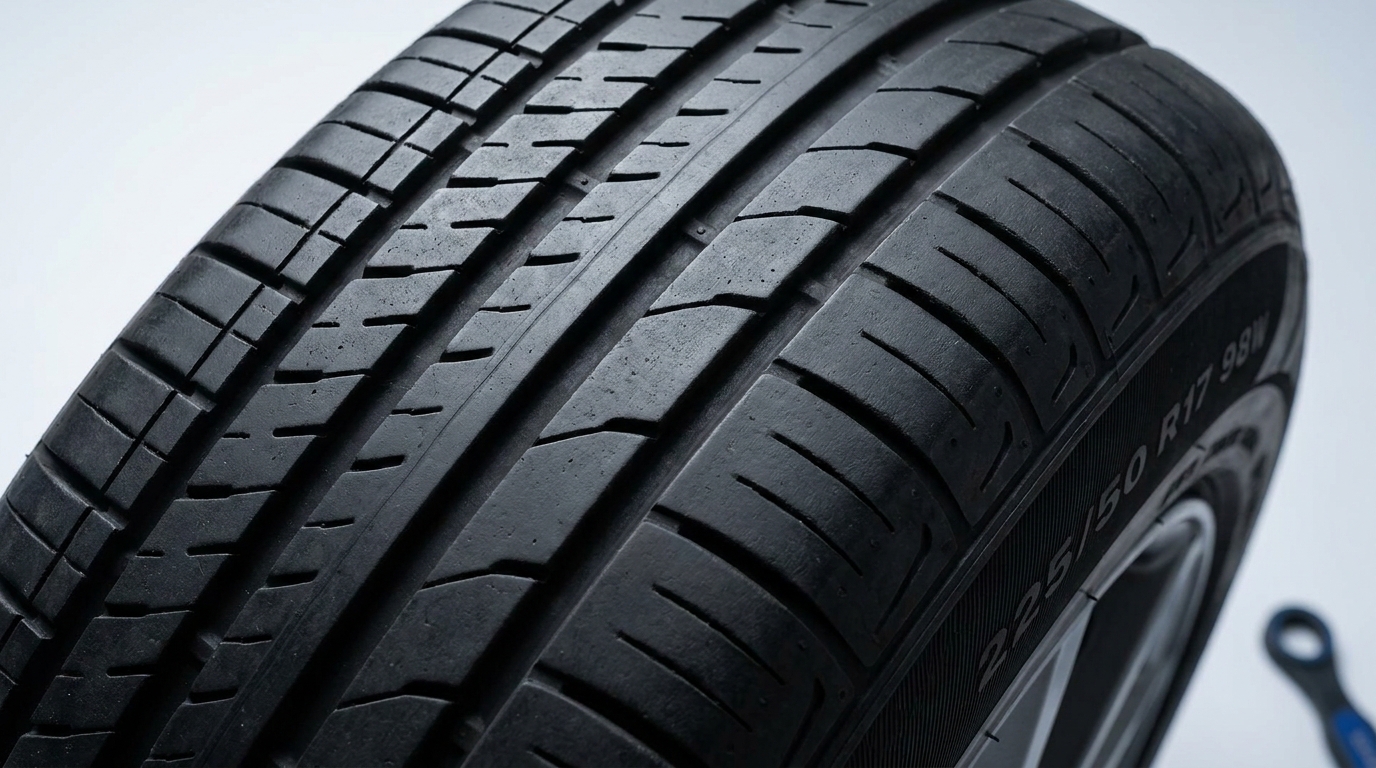
Asymmetrical on a tire means the tread pattern is not the same across the width. The inner and outer halves use different design elements to balance grip, stability and wet evacuation. These tires have a specified side facing outward, indicated by Outside and Inside markings on the sidewall, which you must follow when fitting the tire (TyreLeader guide).
What asymmetrical means on the tread
Unlike a uniform (symmetrical) tread, an asymmetrical tread mixes different block and groove features across the width to target a broad range of conditions. Retail guidance often describes asymmetrical tires as a common choice on powerful sedans and sports cars because they aim for a balanced blend of stability and wet performance (TyreLeader guide).
How to identify and mount an asymmetrical tire
Find the correct side
Check the sidewall for the words Outside and Inside. Mount the tire so the side marked Outside faces away from the car, and the side marked Inside faces the suspension. This sidewall orientation is the key mounting rule for asymmetrical tires (TyreLeader guide).
What not to do
- Do not flip an asymmetrical tire so the Inside faces out. That defeats its designed performance balance.
- If you are unsure about the markings or fitment, stop and have a professional installer confirm orientation before driving.

Asymmetrical vs directional tires
The AA’s fitting guidance specifically notes that some tires combine directional and asymmetric designs. Follow every applicable marking and the vehicle’s permitted fitment; ask a tire professional to confirm a model-specific rotation pattern.
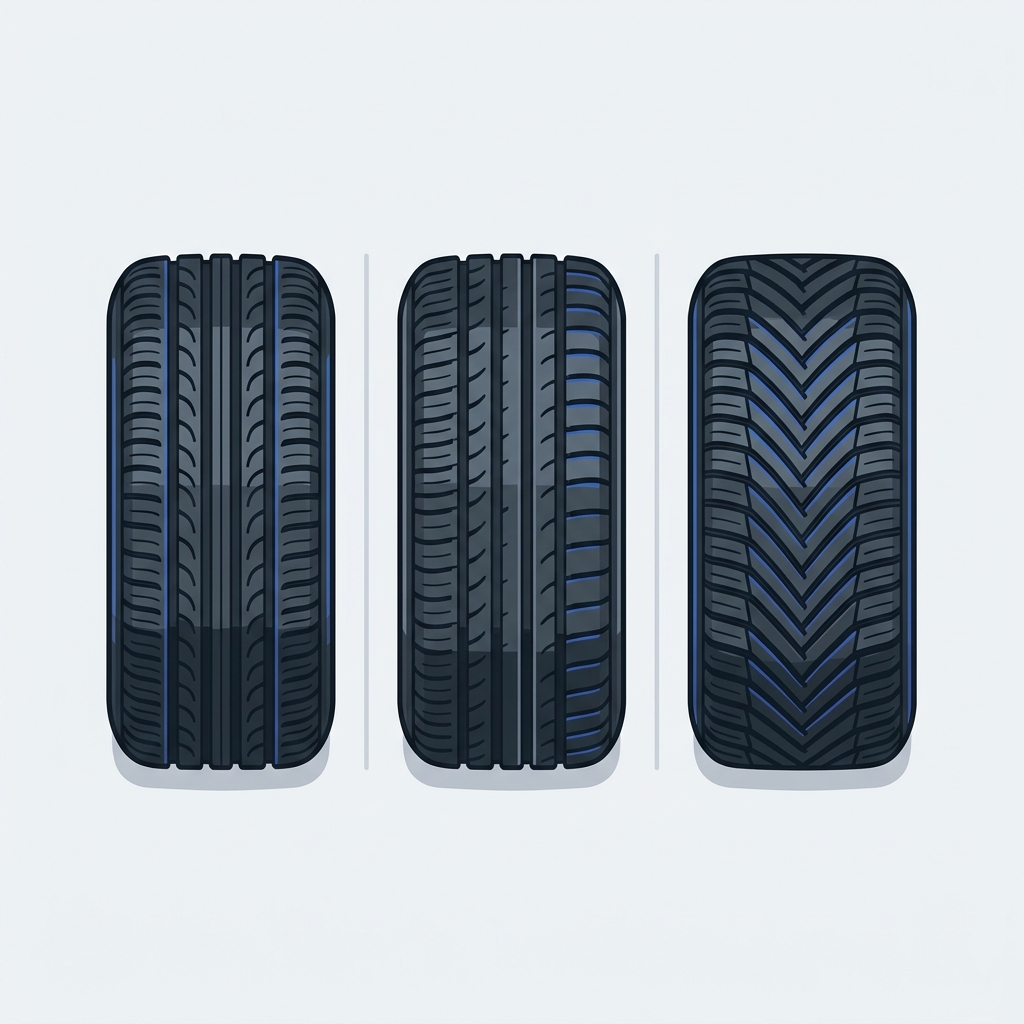
Directional tires are different: they are built to roll in one set direction and are marked with rotation arrows on the sidewall. With directional tires, rotation is typically limited to moving front-to-rear (and rear-to-front) on the same side unless the tire is remounted on the wheel to change direction. This rotation-arrow rule is specific to directional tread designs (TyreLeader guide).
Read both kinds of marking: asymmetrical concerns which face is outside, while directional markings specify the direction of rotation. These are different features and can occur together. Use the sidewall marks to tell them apart before mounting.
Rotation and basic care
For asymmetrical tires, keep the Outside face outward after any rotation. Follow your vehicle handbook or tire-maker guidance for allowable rotation patterns, and never ignore the sidewall orientation. For any tire type, check pressures when tires are cold and watch tread wear regularly.
- Pressure check help: How to check car tire pressure: simple cold-check steps.
- Tread wear check: How do you use the penny trick to check tire tread?
Before you mount or rotate tires: quick checks
Short FAQ
Is an asymmetrical tire the same as a directional tire?
They describe different features. Some tires are both asymmetric and directional, so Outside/Inside markings do not cancel a rotation arrow or a side-specific fitting requirement (TyreLeader guide).
Can I put an asymmetrical tire on either side of the car?
A non-directional asymmetric tire may be suitable on either side if the vehicle’s approved positions and sizes allow it. A model that is also directional or side-specific needs its additional markings followed; do not decide from the word asymmetric alone (TyreLeader guide).
If you have any doubt about fitment or rotation, ask a qualified tire shop to confirm the correct orientation before driving.
