
The journal
How big a windshield chip can be repaired (and when to replace)
There’s no universal coin-size rule. Providers often repair small chips after checking size, type, depth, location, and ADAS. Here’s how to decide and what to do next.
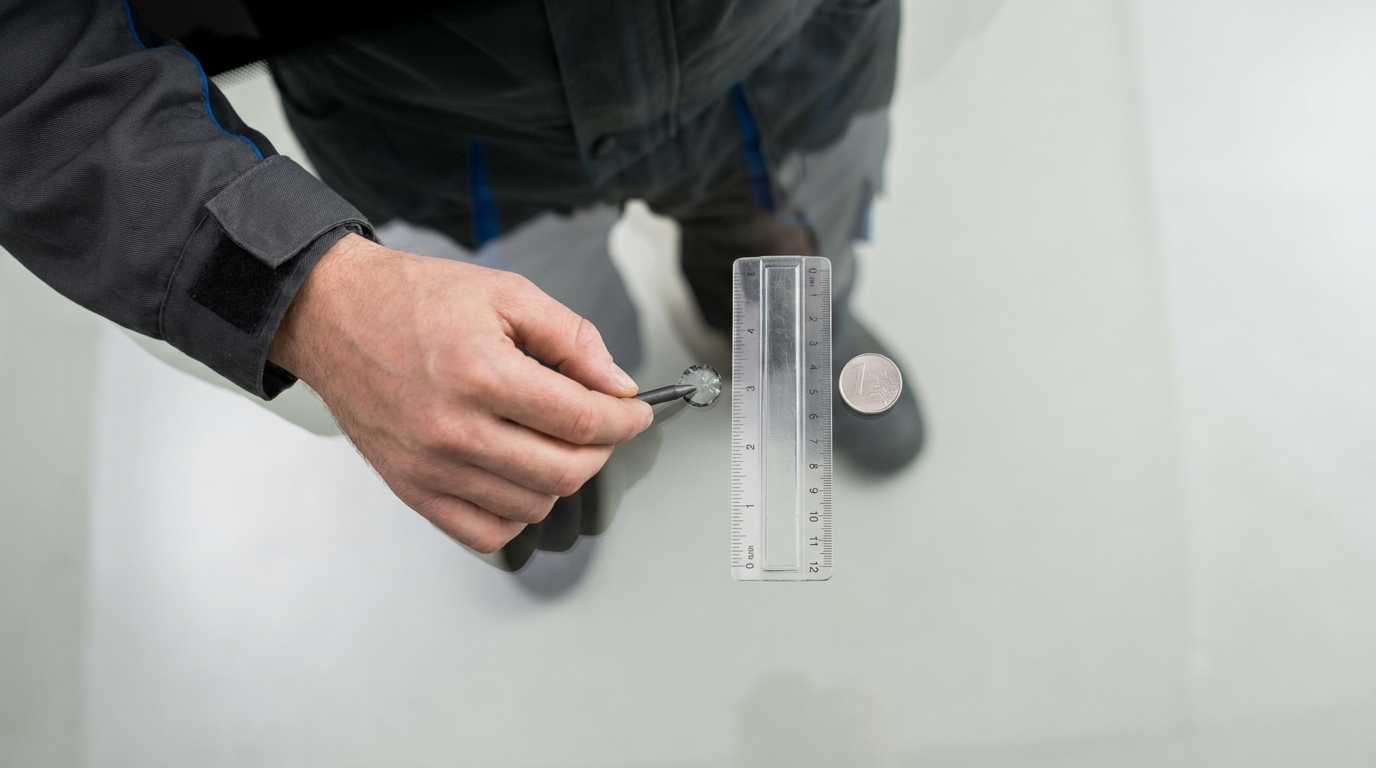
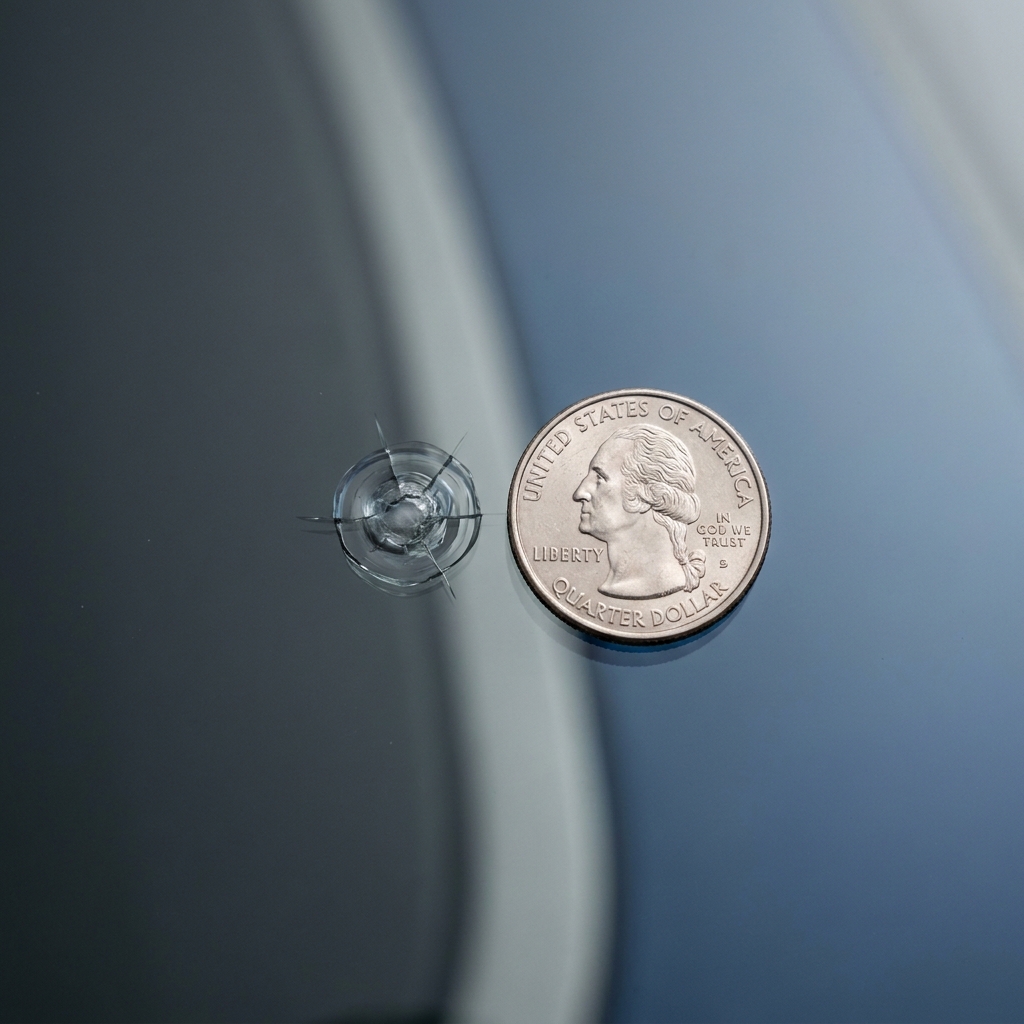
There isn’t a universal size guarantee. Many providers consider small chips repairable, but the final call depends on size, depth, damage type, location relative to your sight line and the glass edge, and whether cameras or sensors are affected. As a general guideline, AAA notes that chips up to about the size of a quarter and cracks that a dollar bill can cover may be candidates for repair, provided placement and depth allow it. Damage in the driver’s direct view, near the edge, or in an ADAS camera zone often leads to replacement instead (AAA Auto Club guidance; AAA Automotive).
What makes a chip repairable
Technicians look at several factors together, not just size:
- Type and size: Simple bull’s-eyes or small chips are more often repairable. AAA’s rule-of-thumb: about quarter-size chips and cracks short enough to fit under a dollar bill may qualify (AAA Auto Club guidance).
- Depth and extent: Deep damage or multiple spreading cracks reduce the chance of a sound repair (AAA Automotive).
- Location: In the driver’s primary sight line or close to the glass edge usually pushes the decision toward replacement because even a good repair can leave minor distortion and edge damage can affect structural integrity (AAA Auto Club guidance; AAA Automotive).
- ADAS zones: If damage is in the area used by forward cameras or sensors, replacement and camera recalibration are commonly required (AAA Automotive).
Common guidelines shops use (not promises)
Use these as talking points with a pro, not a self-approval:
- Quarter-size chip or smaller may be repairable if placement and depth allow (AAA Auto Club guidance).
- Cracks no longer than a dollar bill are sometimes repaired; longer or spreading cracks usually need replacement (AAA Auto Club guidance).
- Star breaks: a training note used in the industry flags star chips as too large to repair when three or more legs each exceed about 3 inches (Delta Kits training note).
Bottom line: coin or bill comparisons are only starting points. Let a qualified glass technician inspect size, depth, and exact placement before you decide.
Quick prep before contacting a glass pro
When to replace instead of repair
- In the driver’s direct sight line, even small damage can warrant replacement because repairs can leave a visible mark (AAA Auto Club guidance).
- Near the glass edge or part of an edge crack, where structural strength is most affected (AAA Automotive).
- Cracks longer than a dollar bill or multiple cracks spreading across the glass (AAA Auto Club guidance).
- In an ADAS camera/sensor zone, which typically requires replacement and calibration for proper system function (AAA Automotive).
What a professional repair involves
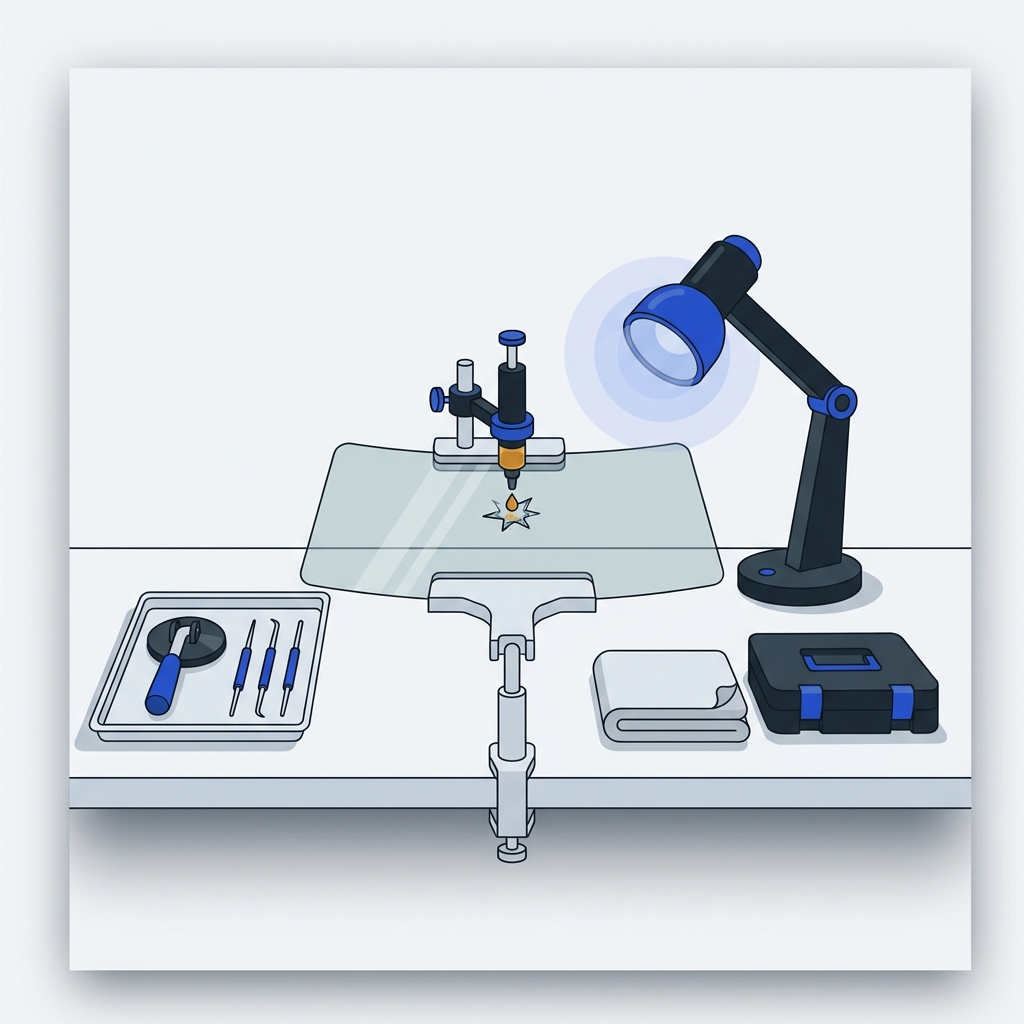
Most repairs use resin injection: the area is cleaned, resin is drawn into the break using vacuum/pressure, then cured (often with UV) and leveled. The goal is to stop spread and restore strength, not make the spot vanish completely, so a faint cosmetic mark may remain (AAA Auto Club guidance; Glass Doctor).
DIY kits use similar principles but have tighter limits: larger than about a quarter or cracks over a few inches typically exceed DIY capability and should be assessed by a professional (Glass Doctor).
Aftercare
Follow your provider’s instructions. As a rule, avoid high-pressure washes right after repair and keep an eye on the spot for changes over the next few days (Glass Doctor).
Related reading from Driven & Kept
- How do you get rid of haze on the inside of a windshield?
- Can I replace my windshield wipers myself?

FAQ
Can a quarter-size chip always be repaired?
No. AAA treats quarter-size as a general threshold only. Placement (driver’s view, edge), depth, and crack pattern can still rule out repair (AAA Auto Club guidance).
If the chip is near my camera or sensor, why might replacement be required?
Glass in ADAS camera zones needs precise clarity and placement. Replacement is often paired with camera recalibration to restore proper system function (AAA Automotive).
Will a repair make the chip invisible?
Typically no. Resin repair aims to stop spreading and restore strength; a faint blemish often remains (AAA Auto Club guidance).